



Across Pune’s fitness community, we’ve observed a consistent pattern. People are increasing their protein intake, but their digestive systems aren’t keeping up. This often leads to a frustrating trade-off (better recovery, but worse gut comfort). But here’s the key insight:
In most cases, it’s not your body. It’s the type of protein you’re using.
Why Whey Protein Causes Bloating
A common question people ask is: “Why does whey protein cause bloating?” There are two primary reasons behind this.
1. Lactose Content
Traditional whey protein—especially whey concentrate—contains higher levels of lactose (milk sugar). For many individuals, this can lead to:
- Gas
- Bloating
- Digestive discomfort
Even mild lactose sensitivity can make a noticeable difference in how your body responds.
2. Incomplete Protein Digestion
Switching to whey isolate (which is lower in lactose) helps—but doesn’t always solve the issue completely. That’s because digestion doesn’t stop at lactose. Protein itself needs to be broken down into smaller amino acids before it can be absorbed efficiently. This process relies on digestive enzymes—particularly protease. Without adequate enzymatic support, larger protein molecules can remain in the gut longer than they should. The result?
- A heavy feeling after shaking
- Slower digestion
- General discomfort
Whey Isolate vs Whey Concentrate: Which Is Better for Digestion?
If digestion is your priority, the difference between whey isolate and concentrate matters.
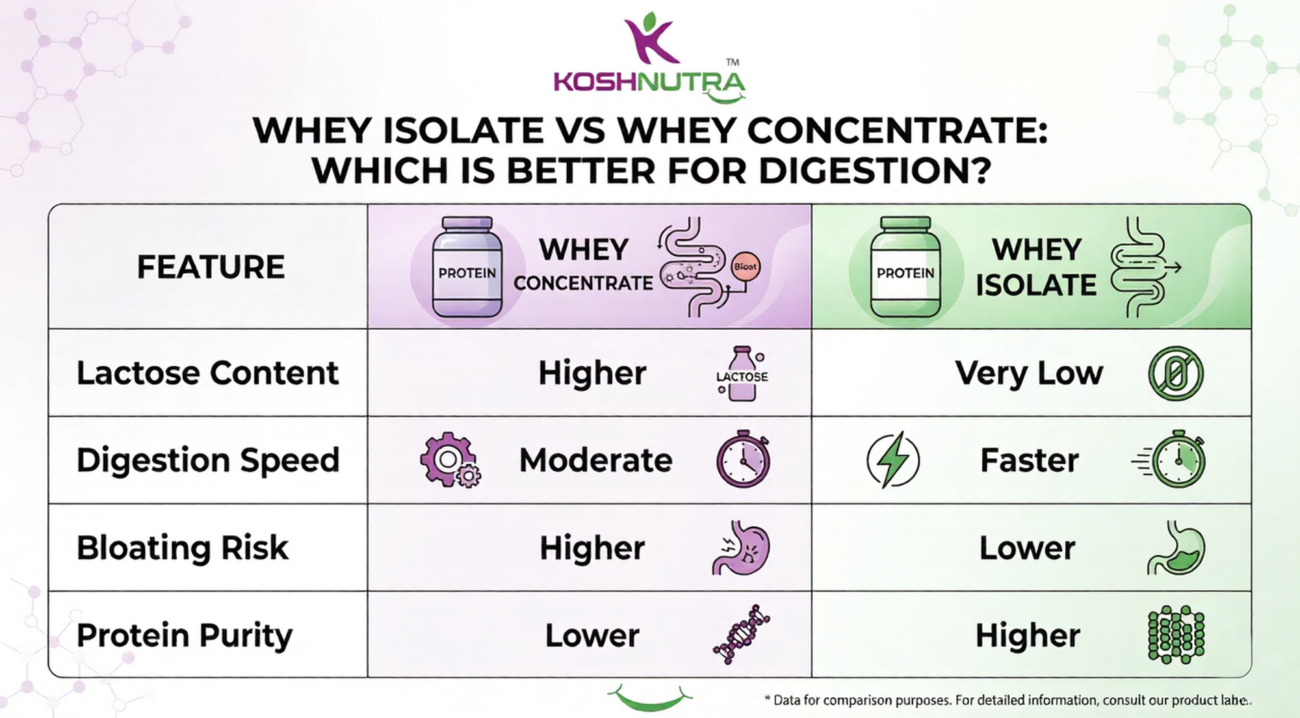
Whey isolate is generally considered a better option for those with sensitive stomachs due to its lower lactose content and higher purity. However, there’s an important nuance:
Not all whey isolate is equally easy to digest.
Processing quality and formulation play a major role in how your body responds.
What Makes a Whey Protein Easy to Digest?
If you’re searching for the best whey isolate for digestion or a protein that doesn’t cause bloating, there are a few key factors to consider:
1. Low Lactose
Reduces one of the most common triggers of digestive discomfort.
2. Digestive Enzymes
Support the breakdown of protein into absorbable amino acids.
3. Minimal Additives
Artificial sweeteners, fillers, and gums can sometimes worsen gut issues.
4. Gut-Support Ingredients
Prebiotics, like inulin, help improve the overall digestive environment.
How Koshnutra Whey Isolate Supports Better Digestion
At Koshnutra, we approached whey isolate differently, based on real-world feedback from users who struggled with digestion.
1. Ultra-Low Lactose Whey Isolate
Our filtration process removes most lactose and unwanted fats while preserving the quality of protein. This helps reduce common triggers of bloating.
2. Enzyme-Supported Formula (Protease + Lactase)
We include a targeted enzyme system to support both:
- Protein breakdown (protease)
- Residual lactose digestion (lactase)
This combination helps your body process the shake more efficiently—rather than letting it sit heavy in your gut.
3. Prebiotic Fiber (Inulin)
We added inulin to support beneficial gut bacteria. Because digestion isn’t just about what you consume—it’s about how your gut handles it over time.
4. Clean, Functional Formulation
We avoid unnecessary fillers and focus on a formulation that supports both performance and comfort. The goal is simple:
Give your body what it needs—without adding extra digestive load.
Is Whey Isolate Good for Lactose Intolerance?
In most cases, yes. Whey isolate contains significantly less lactose than concentrate, making it a better option for individuals with mild lactose intolerance. However, sensitivity levels vary. Some individuals may still experience discomfort depending on their digestive capacity. This is where enzyme support can make a meaningful difference.
Who Should Consider a Low-Bloat Whey Protein?
A digestion-friendly whey isolate is especially useful if you:
- Feel bloated after regular protein shakes
- Have mild lactose sensitivity
- Want faster digestion and better post-workout recovery
- Prefer clean, minimal-ingredient supplements
If you’re managing conditions like diabetes or using GLP-1 medications (such as Ozempic or Mounjaro), digestion may slow down, making protein quality and absorbability even more important. (If you are under medical supervision, it’s always advisable to consult your healthcare provider before making changes.)
How to Take Whey Isolate for Better Digestion
Even the best protein can feel heavy if used incorrectly. Here are a few practical guidelines:
1. Mix with Water Instead of Milk
Milk reintroduces lactose, which can counteract the benefits of whey isolate.
2. Take It at the Right Time
Post-workout or between meals is ideal, when your body is primed for nutrient absorption.
3. Pay Attention to Your Body
Your digestion is feedback. A well-formulated whey isolate should feel:
- Light
- Smooth
- Easy to process
Not heavy or uncomfortable.
Why More People Are Switching to Clean Whey Isolate
We’re seeing a clear shift—especially among urban, health-conscious individuals. People are moving away from:
- Cheap protein blends
- Overly sweetened formulas
- Products that prioritize taste over digestibility
And switching to:
- Cleaner ingredients
- Smarter formulations
- Proteins that support both performance and gut health
Because long-term fitness isn’t just about hitting protein targets, it’s about consistency, recovery, and how your body actually responds. If your current protein shake leaves you feeling bloated or sluggish, it’s not something you should ignore. It’s a sign that your body isn’t processing it efficiently. A high-quality whey isolate designed with digestion in mind should support your body without creating additional stress.
Upgrade to a Smarter Protein
Koshnutra Whey Isolate is designed to deliver:
- Clean, high-quality protein
- Better digestion and absorption
- A lighter, more comfortable experience
No unnecessary fillers. No heavy after-feel. Just a formulation that works with your body, not against it.
Check out our products here


