


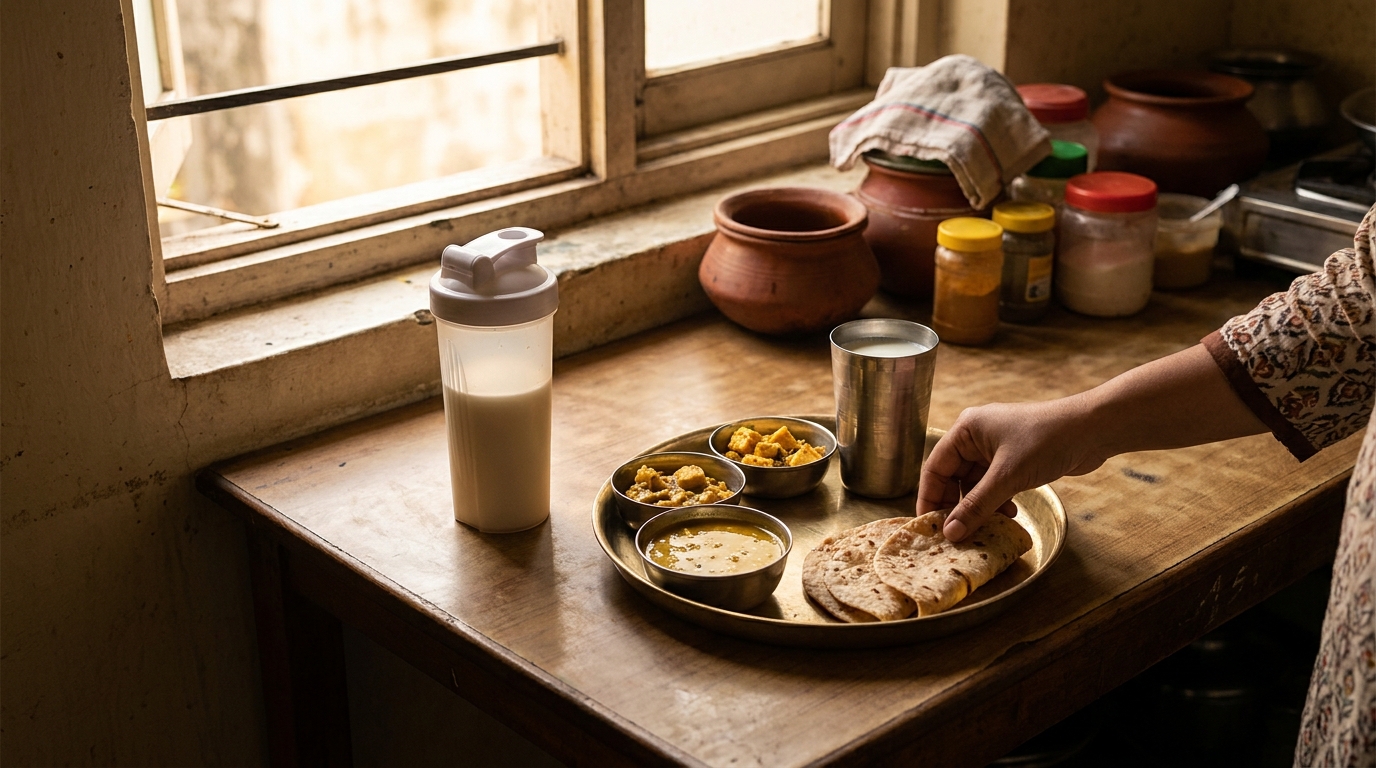
Reviewed for nutritional accuracy | Written for health-conscious readers across India
You don’t have to spend a fortune to get enough protein each day. Whether you’re a college student in Pune or a working professional in Bengaluru, affordable, high-protein food is already around you.
This guide ranks 17 common protein sources by cost per gram of protein. It also gives you two clean supplement options for when cooking is not an option. No filler. Only practical answers.
This article is reviewed by Dietitian Sheetal Mudgal — a Pune-based registered dietitian with 21+ years of clinical experience in weight management, diabetes, thyroid, and sports nutrition. All data references ICMR Dietary Guidelines, USDA FoodData Central, and peer-reviewed studies cited at the end.
Why Your Body Cannot Function Without Enough Protein
Protein isn’t just for bodybuilders. It is the structural framework for every cell in your body.
- Repairs and builds muscle tissue after exercise
- Supports immune function — antibodies are made of protein
- Keeps you full longer, so you skip unnecessary snacking
- Controls hormones like insulin and cortisol
- Prevents muscle loss during weight management
The Indian Council of Medical Research (ICMR) recommends 0.8–1.0 g of protein per kg of body weight for sedentary adults. Active individuals need 1.2–2.0 g/kg. Most Indians consume only 47–50% of their daily protein requirement. That is a serious gap — and it starts with awareness. If you want a personalized protein target based on your health condition, consult Dietitian Sheetal for a customized plan.
How We Ranked These Protein Sources
Each food is evaluated on four criteria: protein per serving, approximate cost in Indian Rupees, protein per ₹10 spent, and bioavailability how much your body actually absorbs.
| Food | Protein/Serving | Approx. Cost (₹) | Protein per ₹10 | Bioavailability |
| Eggs | 6g / egg | ₹7–10/egg | ~7g | High (~91%) |
| Tempeh | 16g / 100g | ₹20–35/100g | ~5–7g | High |
| Lentils / Dal (dry) | 9g / ½ cup cooked | ₹3–5/serve | ~20–25g | Moderate |
| Canned Tuna | 22g / can | ₹80–120/can | ~2g | High |
| Tofu | 8g / 100g | ₹10–20/100g | ~4–7g | Moderate |
| Kala Chana / Black Beans | 7.6g / ½ cup | ₹3–5/serve | ~15–20g | Moderate |
| Hung Curd / Greek Yogurt | 9g / 100g | ₹15–25/100g | ~4–6g | High |
| Moong Beans | 7g / ½ cup | ₹3–5/serve | ~15g | Moderate–High |
| Chana / Chickpeas | 7g / ½ cup | ₹4–6/serve | ~12–15g | Moderate |
| Peanuts / Peanut Butter | 7g / 2 tbsp | ₹3–6/serve | ~10–15g | Moderate |
| Paneer (Cottage Cheese) | 14g / 100g | ₹25–40/100g | ~4–5g | High |
| Soya Chunks (Nutrela) | 36g / 100g dry | ₹5–8/serve | ~40–50g | High |
| Edamame | 18g / cup | ₹30–50/cup | ~4–6g | High |
| Oats | 5g / ½ cup | ₹5–8/serve | ~6–10g | Moderate |
| Pumpkin Seeds | 8g / 28g | ₹20–30/serve | ~3g | Moderate |
| Full Fat Milk | 8g / cup | ₹7–12/cup | ~7g | High |
| Canned Sardines | 23g / can | ₹40–60/can | ~4–5g | High |
| Koshnutra Vegan Protein* | 20g+ / scoop | ₹1,199 / jar | ★ Clean option | High |
| Koshnutra Whey Isolate* | 27g / scoop | ₹1,299 / jar | ★ Highest yield | Very High (~99%) |
*Supplement options — best used alongside whole food, not as replacements. See the Koshnutra section below.
The 17 Best Cheap Protein Sources
1. Eggs
One egg delivers 6g of complete protein with all nine essential amino acids. At ₹7–10 per egg, no whole food gives you this return for so little money.
Best for: Everyone. Especially beginners building a high-protein habit.
How to eat it: Boiled with dal, scrambled with vegetables, mixed into dosa batter for extra protein.
Research shows eating eggs at breakfast significantly reduces total calorie intake throughout the day — a major advantage for weight management.
2. Lentils (Dal)
Masoor, moong, toor — these are not just tradition. They are among the most protein-dense affordable foods on the planet. Half a cup of cooked lentils gives you 9g protein for ₹3–5.
Protein combining tip: Pair dal with rice or roti. Together they form a complete amino acid profile — exactly what your muscles need.
Best for: Vegetarians, vegans, budget families, daily meal prep.
- High in fiber, iron, and folate
- Supports blood sugar regulation
- Shelf life of 1–2 years when stored dry
3. Soya Chunks (Nutrela)
Dried soybeans contain 36g of protein per 100g — the highest of any plant food. Nutrela soya chunks are available across India at ₹5–8 per serving. This is one of the best-value protein foods you can buy.
Best for: Vegetarians and vegans targeting muscle gain.
How to eat it: Added to sabzi, biryani, pulao, or keema-style preparations.
Soy is a complete protein and one of the few plant foods naturally comparable to meat in amino acid profile.
4. Tempeh
Tempeh provides 16g of protein per 100g and is becoming available in Indian metro cities. Its fermented nature makes it easier to digest than regular soy products.
Best for: People with digestive sensitivity, vegans, those transitioning away from dairy.
Fermented foods like tempeh also support gut microbiota health — important for immunity and nutrient absorption.
5. Tofu
Tofu gives you 8g of protein per 100g at ₹10–20. It absorbs flavours well — easy to add into curries, stir-fries, and breakfast scrambles.
Best for: Vegetarians, lactose-intolerant individuals, those avoiding paneer due to fat content.
6. Paneer
Paneer provides 14g of protein per 100g and is culturally embedded in Indian cooking. It is a complete protein with high bioavailability.
Paneer’s casein protein digests slowly — ideal as an evening or pre-bed protein source for muscle recovery overnight.
Best for: Athletes, vegetarians focused on muscle building, growing children.
7. Chickpeas (Chana)
Chana gives 7g of protein and 6g of fiber per half-cup at ₹4–6. Available year-round across India.
Best for: Weight loss, meal preppers, those needing portable high-fiber snacks.
- Roasted chana: 15g protein per 100g — one of the best on-the-go snacks
- Boiled chana in chaat: quick, high-protein, budget-friendly
8. Mung Beans (Moong)
Moong dal is one of the lightest, most digestible legumes — often the first food recommended for recovery meals, post-illness diets, and elderly nutrition. It provides 7g of protein per half-cup cooked at minimal cost.
Best for: Children, elderly individuals, people recovering from illness, those with digestive sensitivity.
- Sprouted moong boosts bioavailability and adds vitamin C
- Moong chilla: a 15-minute high-protein breakfast
9. Peanuts and Natural Peanut Butter
Whole peanuts cost ₹10–15 per 100g and provide 26g of protein per 100g. One of the best protein-per-rupee ratios among plant foods. Natural peanut butter — no added sugar, no hydrogenated fat — gives 7g per two tablespoons.
Best for: Students, athletes, anyone needing calorie-dense high-protein snacking.
Studies link regular peanut consumption to reduced risk of cardiovascular disease and type 2 diabetes.
10. Milk
One glass (250 ml) of full-fat milk provides 8g of highly bioavailable protein. Across India, milk remains one of the most accessible protein sources — especially in rural and semi-urban areas.
Best for: Children, elderly individuals, vegetarians building muscle.
For lactose-intolerant individuals, A2 milk or lactase-treated milk works as an alternative.
11. Hung Curd / Greek Yogurt
Standard dahi has 3–4g protein per 100g. Hung curd concentrates this to 9–10g. It also contains live probiotics that support gut health and immune function.
Best for: Breakfast eaters, people managing weight, those needing gut support.
- Strain regular dahi at home — far cheaper than packaged Greek yogurt
- Works as a base for raita, dips, or smoothies
12. Edamame
Edamame provides 18g of complete protein per cup — rare for a plant food. Increasingly available frozen in Indian metro supermarkets.
Best for: Vegans needing complete amino acids, gym-goers, athletes.
13. Sardines
Sardines deliver 23g of protein per can, calcium from edible bones, vitamin D, and omega-3 fatty acids. Canned sardines are available in India at ₹40–60 per can.
Best for: Non-vegetarians needing calcium and protein together, people with joint issues.
14. Oats
Oats give 5g of protein per half-cup. Modest on their own — but when combined with milk, nuts, or a scoop of protein powder, one bowl becomes a 20–35g protein breakfast for under ₹50.
Protein hack: Mix oats with milk + peanut butter + 1 scoop of Koshnutra Whey Isolate. That is 35g protein in 5 minutes.
Best for: Budget breakfast builders, people managing cholesterol.
15. Pumpkin Seeds
28g of pumpkin seeds gives 8g of protein along with zinc, magnesium, and anti-inflammatory antioxidants. Perfect topping for khichdi, oatmeal, or salads.
Best for: On-the-go snacking, men (zinc supports testosterone), people managing inflammation.
16. Canned Tuna
One can (140g) of tuna provides 22g of high-quality protein at ₹80–120. One of the fastest, no-cook protein sources available.
Safety note: Limit to 2–3 servings per week due to mercury. Choose light tuna (skipjack) over albacore.
Best for: Non-vegetarians needing portable, zero-prep protein.
17. Kala Chana / Black Beans
Kala chana gives 7.6g of protein and 7.5g of fiber per half-cup. The combination keeps you full for hours — one of the best foods for weight management and blood sugar control.
Best for: Weight loss, diabetics, anyone needing sustained energy through the day.
When Whole Foods Are Not Enough: Clean Supplements That Actually Deliver
Real food is always the foundation. But life happens long work shifts, post-gym recovery windows, travel, and medical conditions that restrict variety. In these moments, a clean protein supplement is not a luxury. It is a practical solution.
Most budget protein powders are loaded with maltodextrin (a cheap filler that spikes blood sugar), artificial sweeteners, and soy fillers. Here is what actually matters:
- 20g+ protein per scoop
- Maltodextrin-free
- No artificial sweeteners or soy isolate
- Digestive enzymes included
- Non-GMO and gluten-free
Koshnutra is a Pune-based clean nutrition brand that was built on exactly these principles. You can read more on their About Us page. Their full range is available at koshnutra.com/shop.
Koshnutra Vegan Protein
Koshnutra Vegan Protein (₹1,199) delivers 20g+ of plant-based protein per serving from Pea Protein Isolate and Brown Rice Protein. This combination creates a complete amino acid profile — the biggest weakness of single-source plant proteins.
What Makes It Different
- 100% Plant-based | Soy-free | Gluten-free | Maltodextrin-free
- Enriched with Moringa, Grape Seed Extract, Garcinia, Mangosteen, and Green Tea Extract
- Contains a digestive enzyme blend and fenugreek fiber for easy daily digestion
- Supports lean muscle recovery and long-lasting cellular energy
- Chocolate Hazelnut flavour
Ideal For
Vegans, vegetarians, beginners, people avoiding dairy, and those with IBS, IBD, celiac disease, or thyroid conditions. If you have a thyroid condition and are unsure about your protein needs, Dietitian Sheetal’s thyroid-specific diet programme is a good place to start.
Why It Fits the Budget Protein Intent
One scoop covers the amino acid gap you would otherwise need multiple plant foods to fill. For anyone who cannot cook dal, tempeh, and rice every day — this is the most efficient plant-based option available. Order Koshnutra Vegan Protein.
Koshnutra Whey Isolate True Strength
Koshnutra Whey Isolate True Strength (₹1,299) provides 27g of pure protein per scoop. It uses Whey Isolate — not concentrate — meaning faster absorption, less bloating, and a cleaner macronutrient profile.
What Makes It Different
- 27g Protein + 3g HMB + 5g BCAAs per serving
- Enriched with Omega-3 Fatty Acids, Chromium, Vitamins, Minerals, and Inulin Fiber
- HMB — clinically shown to prevent muscle breakdown and support bone density
- No added sugar | Maltodextrin-free | Keto-friendly
- Coffee flavour
Ideal For
Gym enthusiasts, athletes, diabetic patients (chromium supports insulin sensitivity), menopausal women (HMB helps preserve bone mass), and elderly individuals needing to maintain muscle without high-calorie intake. For diabetics looking at a full dietary approach, Dietitian Sheetal’s diabetic diet programme is a clinically structured resource to complement supplement use.
Why It Fits the Budget Protein Intent
At 27g protein per scoop, the cost-per-gram is highly competitive versus fresh animal proteins — and you skip all the cooking, prep, and food waste. Order Koshnutra Whey Isolate. Have questions before buying? Check the Koshnutra FAQ page.
Koshnutra Vegan Protein vs. Whey Isolate
| Feature | Vegan Protein | Whey Isolate True Strength |
| Protein per Scoop | 20g+ | 27g |
| BCAAs | Naturally present | 5g added |
| HMB | Not included | 3g added |
| Digestive Support | Enzyme Blend + Fenugreek | Inulin Fiber |
| Maltodextrin | Free | Free |
| Soy-Free | Yes | Yes |
| Gluten-Free | Yes | Yes |
| Safe for IBS/IBD | Yes | Check with doctor |
| Best For | Vegans / IBS / Beginners | Athletes / Diabetics / Elderly |
| Price | ₹1,199 | ₹1,299 |
| Flavour | Chocolate Hazelnut | Coffee |
Browse both products and read full ingredient labels at koshnutra.com/shop. If you want help choosing between the two based on your health history, book a consultation with Dietitian Sheetal before making a decision.
How to Hit 100g of Protein Per Day on a Budget in India
A practical sample plan using whole foods from this list, with an optional supplement:
- Breakfast: 2 boiled eggs + moong chilla (2 pieces) + 1 glass milk → ~28g protein | ₹35–50
- Mid-morning: 30g roasted chana + 1 tbsp peanut butter → ~12g protein | ₹10–15
- Lunch: 1 cup toor dal + 1 cup rice + 100g soya chunks sabzi → ~35g protein | ₹40–60
- Evening: 150g hung curd + handful pumpkin seeds → ~18g protein | ₹25–35
- Dinner: 1 cup kala chana curry + 2 roti → ~20g protein | ₹30–45
Total: ~113g protein | Estimated daily cost: ₹140–205
With supplement: Replace morning eggs with 1 scoop Koshnutra Whey Isolate in milk = 35g protein in 2 minutes, post-workout.
Protein Combining: How Plant-Based Eaters Hit Complete Amino Acids
Most plant proteins are incomplete missing one or more essential amino acids. The fix is simple: combine complementary plant proteins at the same meal or across the same day.
| Incomplete Protein A | Pair With | Result |
| Dal / Lentils | Rice or Roti | Complete amino acid profile |
| Oats | Milk or Curd | Complete amino acid profile |
| Peanut Butter | Whole wheat bread | Complete amino acid profile |
| Mung beans | Sesame seeds (til) | Complete amino acid profile |
| Pea Protein | Brown Rice Protein | Complete — the science behind Koshnutra Vegan Protein |
The last row is the exact principle Koshnutra Vegan Protein is built on: pea protein isolate combined with brown rice protein to cover the full essential amino acid spectrum in a single scoop.
FAQ: Cheap Protein Sources — Real Questions, Direct Answers
What is the cheapest protein source per rupee in India?
Soya chunks (Nutrela) and masoor/moong dal. Soya gives ~36g protein per 100g dry weight at ₹5–8 per serving — approximately ₹0.15 per gram of protein.
Can I build muscle on a budget without protein powder?
Yes. Eggs, soya chunks, paneer, dal, and roasted chana combined can meet most muscle-building protein needs. Protein powder is optional — it saves time and helps you hit targets on busy days.
Is plant protein as effective as whey for muscle building?
Modern pea + rice blends are comparable to whey when total daily protein intake is matched. Koshnutra Vegan Protein uses this exact combination. Studies show similar muscle protein synthesis rates.
What protein supplement is safe for IBS, thyroid, or celiac disease?
Koshnutra Vegan Protein is specifically formulated to be safe for IBS, IBD, Celiac Disease, and Thyroid conditions. It is soy-free, gluten-free, and maltodextrin-free with a built-in digestive enzyme blend. That said, if you have an active thyroid condition, always verify your diet plan with a specialist. Dietitian Sheetal’s thyroid diet service is a trusted resource for this.
What is HMB in whey protein and why does it matter?
HMB (Beta-Hydroxy Beta-Methylbutyrate) is a metabolite of leucine that prevents muscle protein breakdown and supports bone density. Koshnutra Whey Isolate True Strength contains 3g HMB per serving — clinically meaningful for athletes, menopausal women, and elderly users.
How much protein do I need per day?
ICMR guidelines: 0.8–1.0g per kg of body weight for sedentary adults. Active individuals: 1.2–1.6g/kg. Athletes: 1.6–2.2g/kg. A 60 kg active adult needs ~96–132g per day.
Is paneer a good protein source compared to chicken?
Paneer gives 14g per 100g. Chicken breast gives 27–31g per 100g. Chicken wins on protein density — but paneer is a strong vegetarian alternative at comparable cost, with high bioavailability.
Should I consult a dietitian before starting a high-protein diet?
If you have diabetes, kidney disease, thyroid conditions, or PCOD — yes, absolutely. A personalised plan matters more than a generic guide. Dietitian Sheetal Mudgal offers online consultations across India for exactly these conditions. Her programmes cover weight loss, diabetic diet, women’s health, kids nutrition, and sports nutrition.
Final Thoughts
If you are in India and struggling to meet your daily protein needs — the answer is not expensive supplements. It is dal, eggs, soya chunks, paneer, moong, and chana. These have been on your plate for generations. The only shift needed is intention.
Eat these as your foundation every day. When convenience matters — after a workout, on a travel day, or when your kitchen is closed — Koshnutra Vegan Protein and Koshnutra Whey Isolate True Strength are clean options with no maltodextrin, no soy fillers, and no shortcuts.
Protein is not a privilege. It is a daily necessity. Make it affordable. Make it yours.
Explore the full Koshnutra range: koshnutra.com/shop | Need a personal diet plan? Book with Dietitian Sheetal | Read more on the Koshnutra Blog
Scientific References
All peer-reviewed studies and authoritative sources used in preparing this article:
→ 1. Phillips SM, Van Loon LJ. Dietary protein for athletes. Journal of Sports Sciences, 2011.
→ 2. Leidy HJ, et al. The role of protein in weight loss and maintenance. AJCN, 2015.
→ 3. ICMR-NIN Dietary Guidelines for Indians, 2020.
→ 4. USDA FoodData Central — Nutritional composition database.
→ 6. Vander Wal JS, et al. Short-term effect of eggs on satiety. EJCN, 2005.
→ 7. Kim JE, et al. Effects of dietary pulse consumption on body weight. AJCN, 2016.
→ 8. Wilson JM, et al. Effects of HMB on muscle mass and strength. JNS, 2014.
→ 10. Aune D, et al. Legume consumption and chronic disease risk. EJCN, 2009.
Disclaimer: This article is for informational purposes only and does not constitute medical advice. Consult a registered dietitian or physician before making significant changes to your diet or supplement regimen.


