



If you’re searching for how to use amla powder for drinking, the simplest method is actually very straightforward. Just mix one teaspoon of amla powder into a glass of lukewarm water and drink it on an empty stomach in the morning. Done consistently once or twice a day, this small habit can create noticeable changes in your digestion.
But here’s what most people in Pune don’t realize.
If your digestion still feels off (even when you’re trying to eat clean) the issue often goes deeper than just food. Your gut may already be under metabolic stress.
To understand why, you need to look at how your daily lifestyle is quietly affecting your body.
Why Pune’s Fast-Paced Lifestyle is Damaging Your Gut
Life in Pune, especially around areas like Hinjewadi and Magarpatta demands speed, flexibility, and long working hours. On the surface, it feels productive. Internally, your body is constantly trying to keep up.
Irregular eating schedules, multiple cups of chai or coffee throughout the day put pressure on your digestive system. Over time, this pattern doesn’t just cause occasional discomfort. It starts to shift how your digestive system functions. Inflammation builds up in the gut lining, acid levels become harder to regulate, and the balance of good and bad bacteria begins to change.
This is why many people experience symptoms that seem random at first, bloating after normal meals, sudden sensitivity to certain foods, or unexplained energy crashes. These are not isolated issues. They are signals of a gut that’s struggling to maintain balance. And this is where understanding the real amla powder uses becomes important.
Amla Powder Uses: More Than Just a Vitamin C Boost
Amla, or Phyllanthus emblica, is often reduced to a simple immunity booster. But in reality, its role in modern nutrition is far more comprehensive especially when it comes to gut and metabolic health.
From a clinical perspective, amla works on multiple systems at once. Its rich antioxidant profile helps calm inflammation in the stomach lining, which is essential for people dealing with acidity or sensitive digestion. At the same time, it supports the gut microbiome by encouraging the growth of beneficial bacteria while limiting harmful strains.
What makes it particularly valuable is its connection to metabolic health. Amla has been shown to support liver function, an organ deeply involved in digestion, detoxification, and fat metabolism. It also plays a role in improving insulin sensitivity, which is critical for individuals managing conditions like PCOD or early-stage diabetes.
So when we talk about amla powder uses, we’re not just talking about digestion. We’re talking about a compound that supports the entire gut–metabolism axis.
Top Benefits of Amla Powder Daily
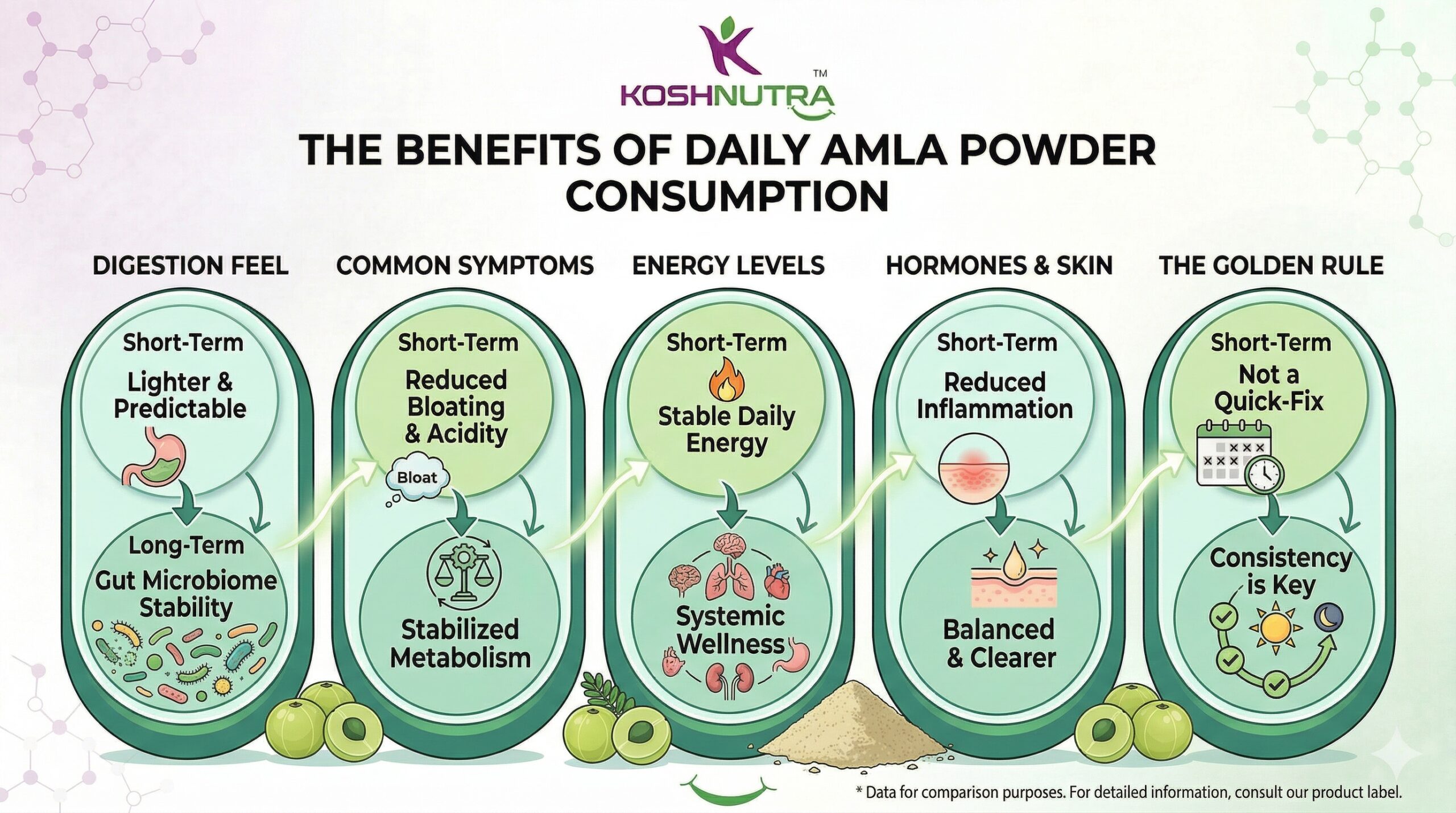
Short-Term Benefits
- Improved Digestion
Most users experience a lighter and more predictable digestive system. - Reduced Discomfort
Helps eliminate bloating and reduces the frequency of acidity. - Stable Energy
Promotes more consistent energy levels throughout the day by reducing internal inflammation.
Long-Term Benefits
- Metabolic Stability
Helps balance the gut microbiome, which leads to a more efficient metabolism. - Systemic Balance:
Supports better blood sugar control and improved hormonal balance. - Clearer Skin
Internal anti-inflammatory effects often result in visibly clearer skin.
The Golden Rule: Consistency is key, Amla is not a “quick-fix.” It works best when taken daily, allowing the body to gradually restore its natural balance over time.
How to Use Amla Powder for Drinking (Best Way)
While there are multiple ways to consume amla powder, not all of them are equally effective.
The most reliable method remain:
- Taking it with lukewarm water in the morning. This allows your body to absorb its active compounds without interference from other foods.
- If your mornings are rushed, adding amla powder to a smoothie can be a practical alternative. It blends easily and doesn’t disrupt your routine.
Some people also prefer taking it in the afternoon with fresh, unsweetened juice to help stabilize energy levels and avoid post-lunch crashes. Regardless of the method, the dosage remains simple: one to two teaspoons daily is enough. What matters more than timing or format is consistency over at least a few weeks.
The Hidden Problem with Most Amla Supplements
Here’s where things get slightly more complex and where many people unknowingly go wrong.
Not all amla powders in the market are created equal. In fact, many commercial health powders contain additives like maltodextrin or synthetic fillers. These ingredients are often used to improve texture or reduce production costs, but they come with metabolic downsides.
Maltodextrin, for example, has a glycemic index higher than regular sugar. This means it can spike blood sugar levels quickly, disrupt gut bacteria, and increase inflammation—exactly the opposite of what you’re trying to achieve.
For individuals already dealing with gut issues, PCOD, or blood sugar imbalances, this can silently worsen the problem rather than solve it.
What Makes a High-Quality Amla Powder Different
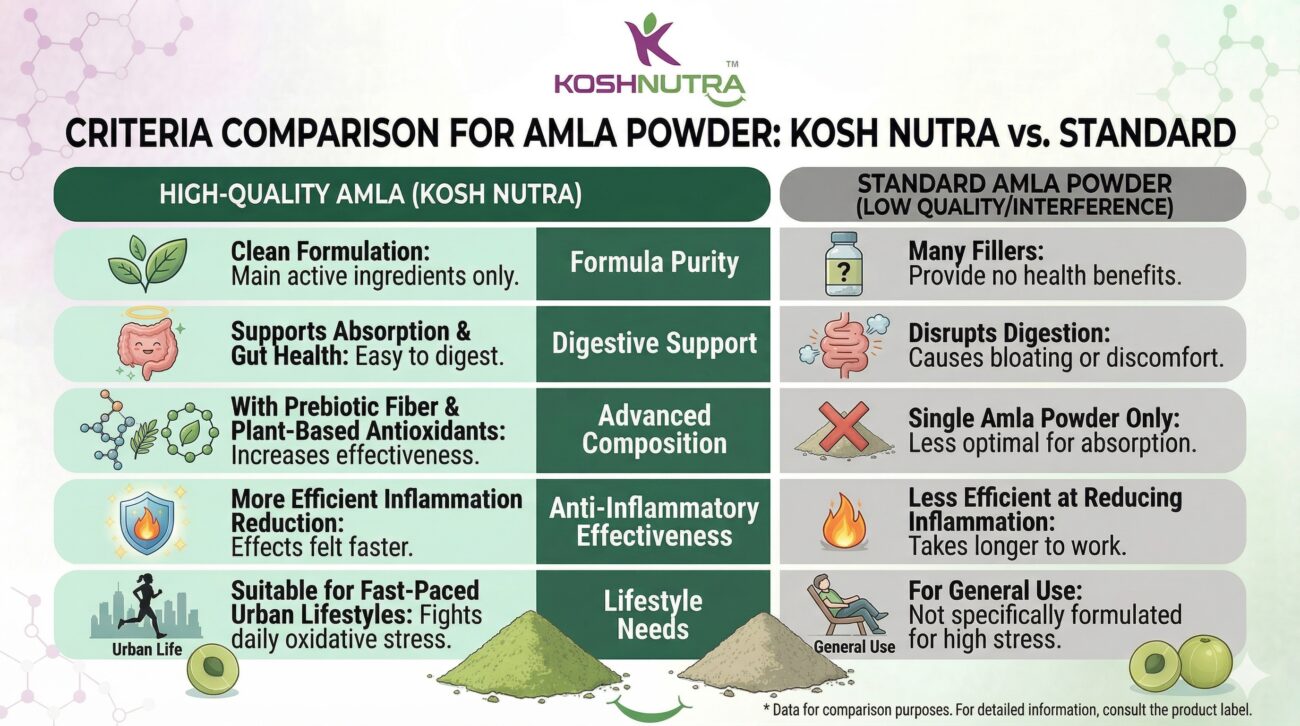
If you’re using amla for its health benefits, the formulation matters just as much as the ingredient itself. A high-quality amla product should feel clean. It should be free from unnecessary fillers and designed to support absorption and gut health, rather than interfere with it.
More advanced formulations often combine amla with complementary ingredients like prebiotic fibers or plant-based antioxidants. These additions help enhance its effectiveness by supporting the gut microbiome and reducing inflammation more efficiently. This is particularly important for people living in fast-paced urban environments, where the body is already under constant stress.
Who Should Consider Taking Amla Powder Daily?
Amla powder can be particularly helpful if your daily routine already puts stress on your digestion.
For example, if you frequently experience bloating or acidity, rely on outside food, or feel low energy despite eating regularly, your gut may not be functioning optimally. The same applies if you’re dealing with metabolic concerns like blood sugar fluctuations or hormonal imbalances.
In these cases, adding a simple, consistent habit like amla supplementation can act as a foundational step toward restoring balance.
Frequently Asked Questions (FAQ)
- Can I drink amla powder daily?
Yes, it is generally safe when consumed in moderate amounts, typically one to two teaspoons per day. - What is the best time to take amla powder?
Morning, on an empty stomach, tends to be the most effective for digestion and metabolism. - Does amla powder help with acidity?
Yes, its anti-inflammatory properties can help soothe the stomach lining and reduce acidity over time. - How long does it take to see results?
Most people begin to notice improvements within two to four weeks of consistent use. - Can diabetics take amla powder?
Yes, amla may help support better blood sugar control by improving insulin sensitivity.
Ready to Restore Your Gut Naturally?
If your digestion feels inconsistent despite your efforts to eat well, the issue may not be your diet alone. It could be a deeper imbalance in your gut. And that’s not something you fix overnight. It requires consistency, the right nutrients, and a smarter approach to daily health. If you are ready to take your first step, we would like to introduce you our high quality amla care powder.
👉 Explore Amla Care here and take the first step toward restoring your gut from within.
Scientific References
Our formulations and statements are grounded in clinical research. For further reading on the science behind our ingredients, please refer to:
- Zhu, X., et al. (2022). Aqueous Extract of Phyllanthus emblica L. Alleviates Functional Dyspepsia through Regulating Gastrointestinal Hormones and Gut Microbiome In Vivo. Frontiers in Microbiology. Direct Link
- Barczynska, R., et al. (2022). Effects of Resistant Dextrin from Potato Starch on the Growth Dynamics of Selected Co-Cultured Strains of Gastrointestinal Bacteria and the Activity of Fecal Enzymes. International Journal of Molecular Sciences. Direct Link


