


Living in fast-paced Indian cities like the IT hubs of Pune and the crowded streets of Mumbai puts constant pressure on your body. Poor digestion, low energy, and dull skin have become common complaints.
Naturally, many people turn to Ayurveda. And most often, the first name that comes up is Amla Powder.
But here’s the problem:
Many people confuse Amla with Bhumi Amla, two completely different plants.
This misunderstanding often leads to choosing the wrong herb and getting little to no results.
In this guide, we break down the bhumi amla and amla differences in the simplest, most practical way—so you can choose the right herb based on your actual health goal.
Botanical Identity: What Are You Actually Taking?
At first glance, the names sound similar. But biologically, they’re not even close.
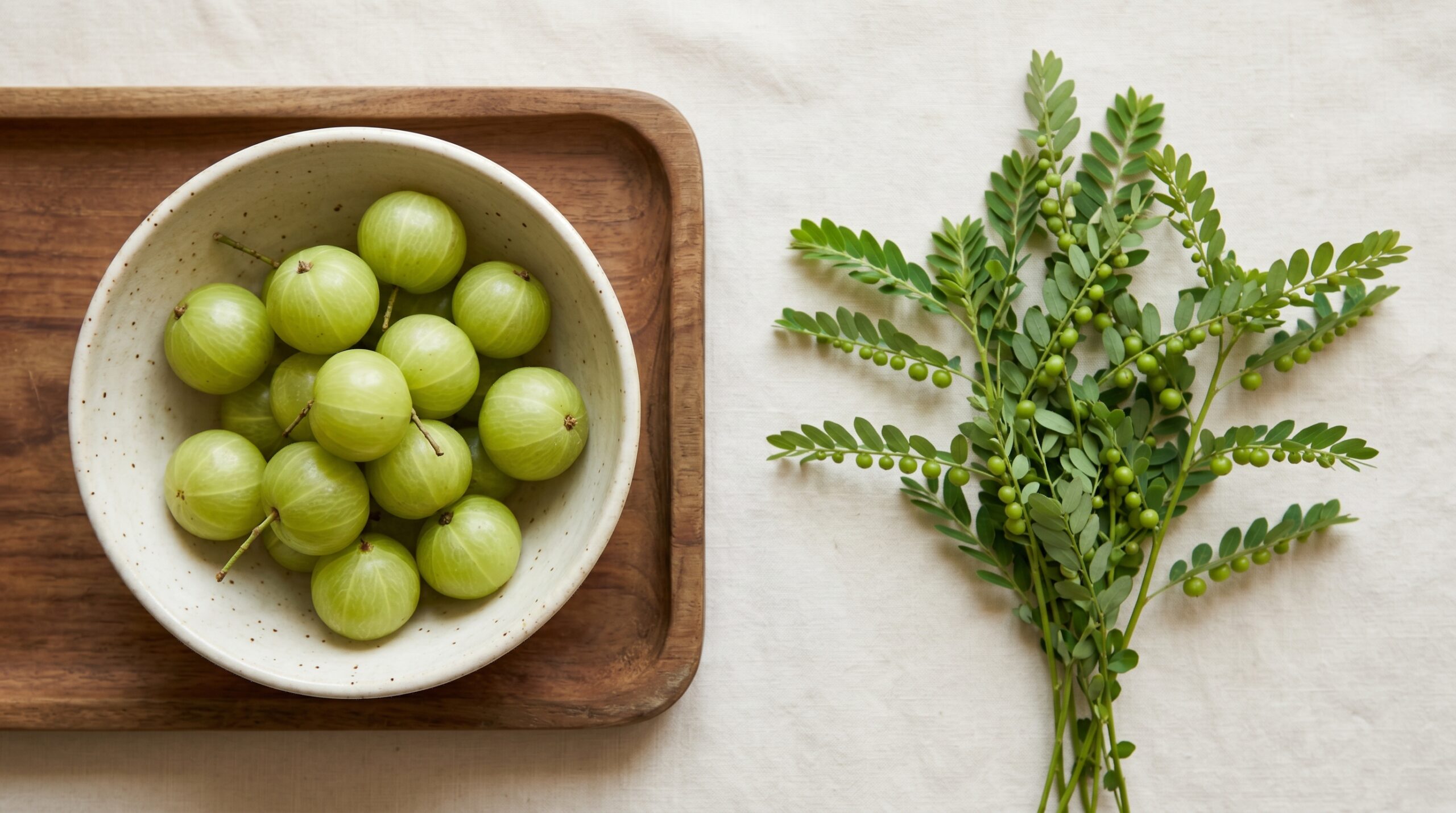
- Amla (Phyllanthus emblica) is a tree that produces fruit.
- Bhumi Amla (Phyllanthus niruri) is a small herb that grows close to the ground.
That alone already tells you something important. They are built differently, so they work differently in the body.
How Do You Identify Bhumi Amla?
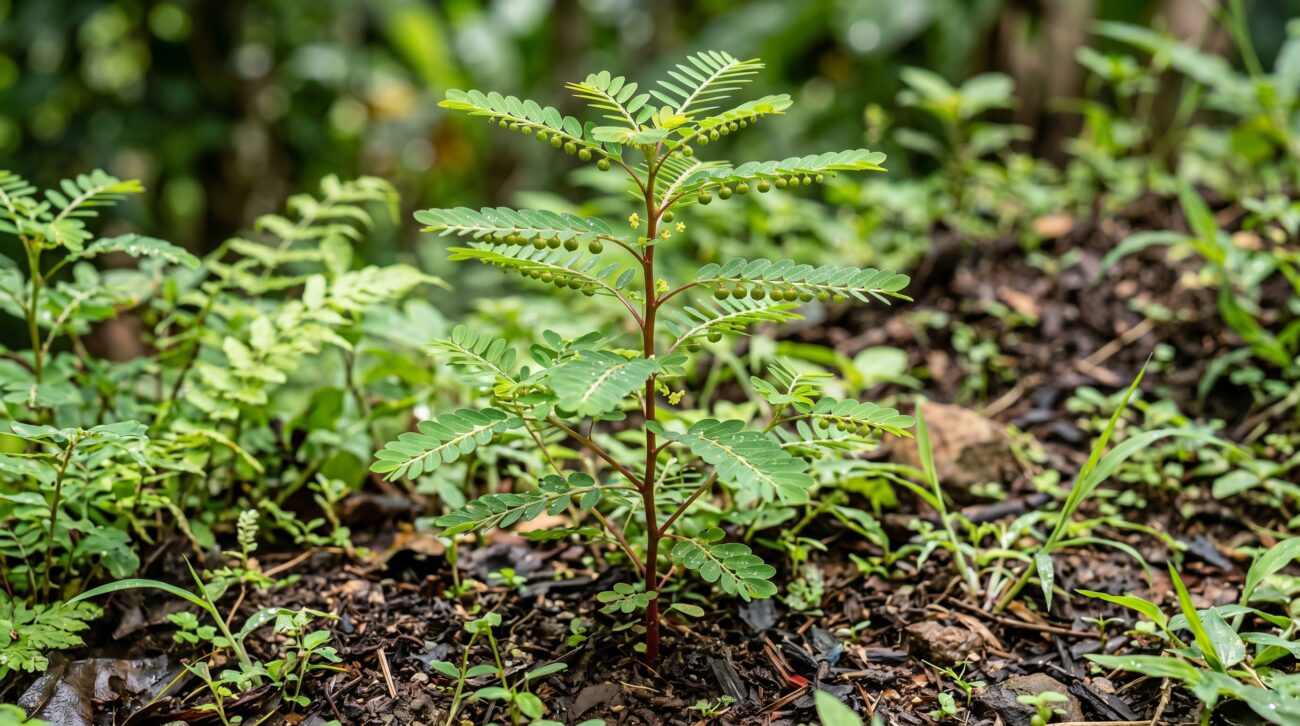
Bhumi Amla grows close to the ground and has tiny green fruits attached underneath its leaves along the stem. That’s the easiest way to recognize it. If you’re looking at something that:
- Stays low to the soil
- Has very small leaves
- Carries bead-like fruits under the branches
You’re looking at Bhumi Amla.
Now compare that to Amla:
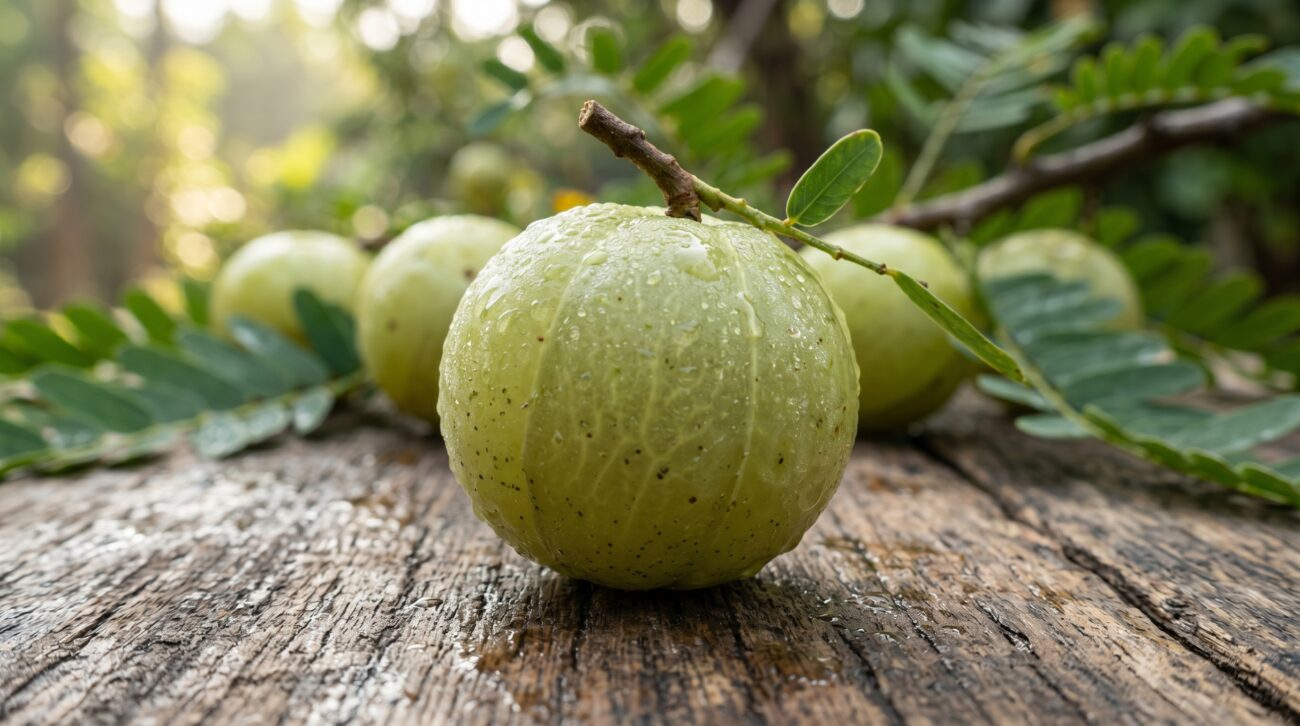
- Grows on a tree
- Produces round, pale-green fruits
- Roughly the size of a golf ball
Visually, they are impossible to confuse—once you know what to look for.
Amla vs Bhumi Amla: Quick Comparison
If you want a fast breakdown, here it is:
| Feature | Amla | Bhumi Amla |
|---|---|---|
| Botanical Name | Phyllanthus emblica | Phyllanthus niruri |
| Type | Tree | Small herb |
| Part Used | Fruit | Whole plant |
| Taste | Sour, complex | Bitter |
| Main Use | Daily health | Liver & kidney support |
Taste and Properties: Why It Matters
Amla is one of the rare foods in Ayurveda that contains multiple taste profiles—sour, sweet, bitter, astringent, and pungent. That’s why it works well for the following:
- Daily consumption
- Long-term balance
- Overall system support
Bhumi Amla is very different. It is:
- Extremely bitter
- Highly astringent
- Not meant for casual or daily intake
This is not something you take like a supplement. It’s closer to a targeted remedy.
Which is better: Amla or Bhumi Amla?
Short answer: neither is better. It depends on what you need.
- If your goal is daily health, go for amla.
- If you’re dealing with a specific condition, Bhumi Amla may be more relevant
This is where most people go wrong. They pick based on popularity, not purpose.
Parts Used: What Actually Goes Into Your Body
- Amla: only the fruit is used
- Bhumi Amla: the entire plant (roots, stems, leaves)
This matters because the more targeted the plant usage, the more targeted the effect.
Benefits of Amla vs Bhumi Amla
Let’s keep this simple and practical.
Amla Benefits (Daily Use)
- Supports immunity
- Helps improve skin and hair quality
- Aids digestion and gut balance
- Supports blood sugar stability
Bhumi Amla Benefits (Targeted Use)
- Supports liver function
- Helps manage kidney and gallbladder stones
- Reduces inflammation in certain conditions
Is Bhumi Amla Good for Fatty Liver?
Yes, Bhumi Amla is widely used for fatty liver support. It helps by:
- Supporting liver detox pathways
- Reducing oxidative stress
- Improving liver enzyme balance
This is why it’s often recommended in short-term liver protocols.
Is Bhumi Amla Good for Gallbladder Stones?
It can help—but with a specific role.
Bhumi amla is known as a “stone breaker” because it:
- Reduces crystal formation
- Supports bile flow
- Helps prevent buildup
It’s more commonly used for kidney stones, but the same mechanism can support gallbladder health.
Who Should Not Take Bhumi Amla?
Bhumi Amla is not for everyone. Avoid it if you:
- You are pregnant or breastfeeding
- Take medication for blood sugar or blood pressure
- Have bleeding-related conditions
- You are preparing for surgery
It can:
- Lower blood sugar too much
- Drop blood pressure
- Act as a blood thinner
This is why it should not be treated as a daily supplement.
Side Effects: What to Watch Out For
Amla
Generally safe, but:
- May cause mild acidity in excess
- Can feel drying for some people
Bhumi Amla
Stronger effects, including:
- Low blood sugar
- Low blood pressure
- Not suitable for long-term use
Which One Should You Choose?
Keep it simple:
- Daily immunity & energy → Amla
- Gut health & metabolism → Amla
- Fatty liver support → Bhumi Amla
- Short-term detox → Bhumi Amla
If you’re thinking long-term, Amla is usually the better fit.
The Real Problem With Most Amla Powder
Here’s something most people don’t realize. A lot of amla powder in the market isn’t pure. Many products contain:
- Maltodextrin
- Fillers
- Artificial stabilizers
This can lead to:
- Blood sugar spikes
- Bloating
- Reduced effectiveness
So even if you’re choosing the right herb, you might still get poor results.
A Smarter Way to Take Amla Daily
If you’re using Amla regularly, quality matters more than anything. Look for:
- No fillers
- Clean formulation
- Good absorption
- Gut-friendly ingredients
Because at the end of the day, it’s not just what you take; it’s how your body absorbs it. That’s where Koshnutra stands.
Amla Powder by Koshnutra
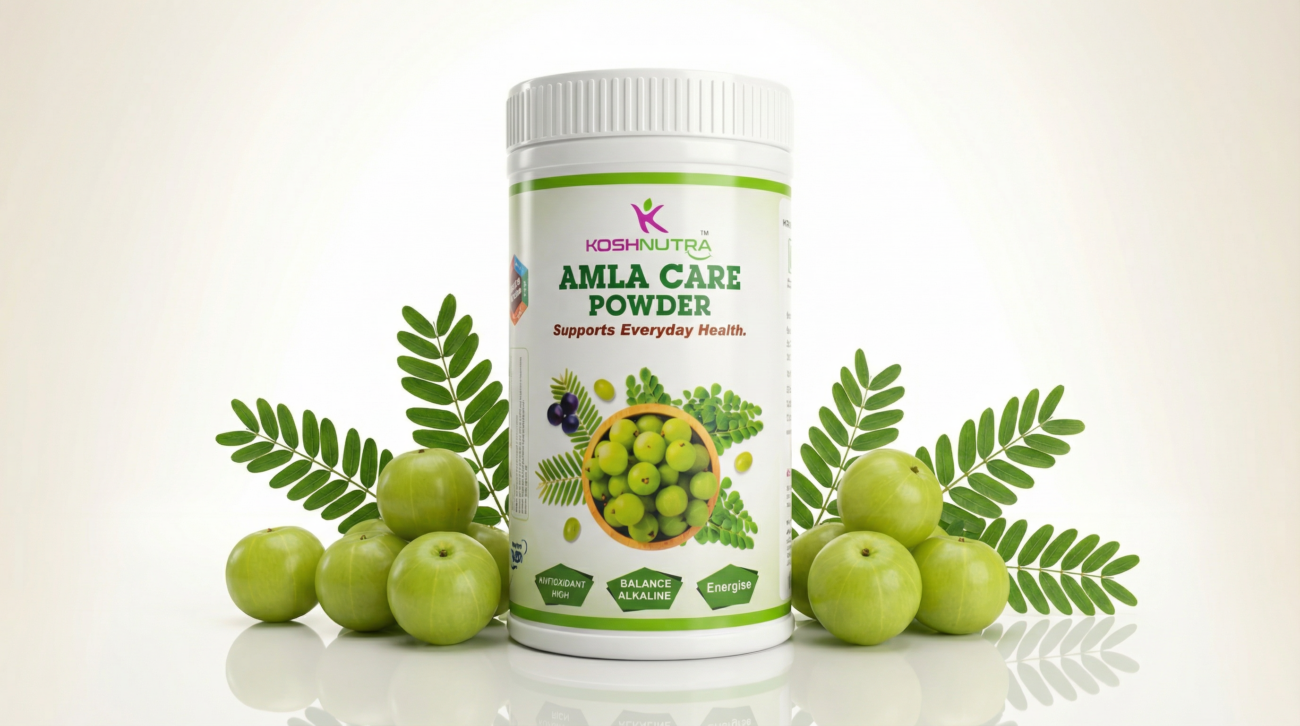
Most people stop at choosing the right herb, and that’s where the problem begins. You understand the difference, you pick amla for daily health but nothing really changes. Energy still dips, digestion feels inconsistent, and visible results take longer than expected. The issue isn’t Ayurveda. It’s the formulation. Many Amla powders in the market are diluted with maltodextrin, loaded with fillers, and poorly absorbed by the body. So even if you’re taking the right ingredient, you’re not getting the outcome you’re expecting.
That’s why formulation matters. Amla only works when it’s clean, bioavailable, and supported by ingredients that enhance absorption. A more practical approach is combining Amla with complementary herbs like Giloy, Moringa, and grape seed extract, while keeping the formula completely filler-free. That’s the approach taken at Koshnutra, not to create another product, but to fix what most products get wrong. Because in the end, your body doesn’t respond to labels, it responds to what it can actually absorb, consistently, every day.
If you’ve understood the difference, now it’s about choosing better. Start your daily routine with Koshnutra Amla Care here.
Scientific References
Amla (Phyllanthus emblica) & Immunity/Metabolism: Variya, B. C., Bakrania, A. K., & Patel, S. S. (2016). Emblica officinalis (Amla): A review for its phytochemistry, ethnomedicinal uses and medicinal potentials with respect to molecular mechanisms. Pharmacological Research. View on PubMed
Bhumi Amla (Phyllanthus niruri) & Liver/Kidney Health: Mao, X., Wu, L. F., Guo, H. L., Chen, W. J., Cui, Y. P., Qi, Q., & Li, S. (2016). The Genus Phyllanthus: An Ethnopharmacological, Phytochemical, and Pharmacological Review. Evidence-based complementary and alternative medicine. View on PubMed
Dangers of Maltodextrin in Gut Health: Nickerson, K. P., & McDonald, C. (2012). Crohn’s disease-associated adherent-invasive Escherichia coli adhesion is enhanced by exposure to the ubiquitous dietary polysaccharide maltodextrin. PLoS ONE. View on PubMed


