


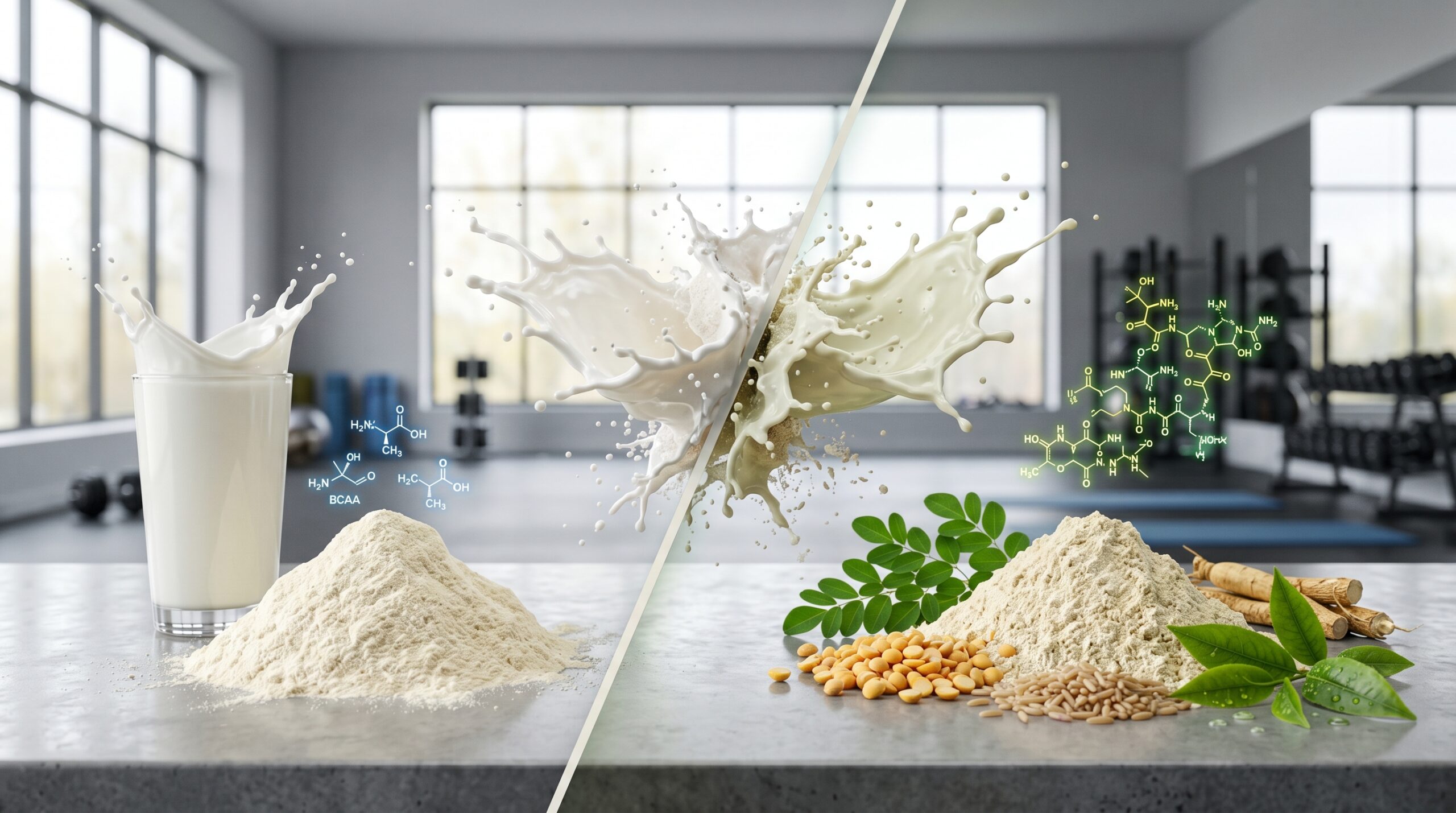
The plant protein vs whey protein debate has always been a hot topic in the fitness and wellness community. The key to choosing a supplement to fuel your performance is understanding the differences in bioavailability, amino acid profiles, and digestive impact to achieve the optimal results.
This comprehensive guide covers the science of plant-based proteins (namely pea protein) and whey and answers your most important questions, from muscle and vegan health to gut health.
In-Depth Analysis: Similarities, Differences, and User Impact
Before diving into the specific benefits, it is crucial to understand how these two proteins fundamentally compare and, more importantly, how their features directly impact your daily routine and long-term goals.
The Core Similarities
At their foundation, both whey and high-quality plant proteins share several critical functions:
- Muscle Protein Synthesis (MPS)
Both provide the essential amino acids required to repair micro-tears in your muscles after training. - Weight Management Support
Both stabilize blood sugar levels and promote satiety, helping you avoid junk food cravings. - Convenience
Both offer a highly concentrated, easy-to-mix dose of macronutrients that is far faster to consume than preparing a whole-food meal.
The Crucial Differences (That Actually Impact Your Decision)
- Absorption Rate
Whey digests rapidly (usually within 1-2 hours), causing a quick spike in amino acids. Plant protein, because it retains trace amounts of complex carbohydrates and fibers, digests moderately (3-4 hours). What this means for you: Whey is slightly better for immediate post-workout consumption, but plant protein is vastly superior for keeping you full during a long workday or a calorie deficit. - Allergen Profile & Inflammatory Response
Whey contains lactose and dairy proteins (casein), which can trigger inflammatory responses in sensitive individuals. Plant protein is naturally hypoallergenic. What this means for you: If you constantly battle bloating, sluggishness, or body acne after your protein shakes, switching to a plant-based isolate will likely clear those issues up completely. - Micronutrient Density
Whey provides calcium and B vitamins. Pea protein is naturally loaded with Iron (often covering 30% of your daily needs per scoop). What this means for you: Vegans, women, or those prone to anemia will benefit significantly more from the iron boost in pea protein.
Comprehensive Scientific Comparison Table
To give you a clear, data-driven perspective, here is how whey and plant protein (specifically pea protein isolate) stack up against each other based on clinical nutrition journals:
| Comparison Aspect | Whey Protein Isolate | Plant Protein (Pea Isolate) | The Real-World Impact on You |
| Bioavailability (PDCAAS) | High (1.0 Score) | High (~0.89 – 0.93 Score) | Both absorb excellently, but you may need a slightly larger scoop of plant protein to match the exact amino acid uptake of whey. |
| Muscle Building Efficacy | Excellent (Naturally high Leucine) | Excellent (Requires complete amino acid profile) | Babault et al. (2015) proved both yield the exact same muscle thickness gains over 12 weeks of training. |
| Digestion Speed | Fast (1-2 Hours) | Moderate (3-4 Hours) | Whey floods the muscles faster; Plant protein keeps hunger away longer, making it better for weight loss. |
| Gut Health & Allergens | Contains Lactose / Dairy | 100% Hypoallergenic | Whey can cause severe bloating and gas in 65% of the population. Pea protein guarantees a calm, flat stomach. |
| Environmental Impact | High Carbon Footprint | Low Carbon Footprint | Plant protein requires drastically less water and land to produce, making it the eco-friendly choice. |
Pros and Cons Breakdown
Still on the fence? Here is a quick breakdown of the advantages and disadvantages of each to help you finalize your choice.
Whey Protein
Pros:
- Offers a complete, perfectly balanced essential amino acid profile.
- The fastest digesting protein available for immediate post-workout recovery.
- Mixes incredibly well and generally has a smoother, milkshake-like texture.
- Often cheaper per serving during major retail sales.
Cons:
- Can trigger severe bloating, gas, and digestive distress in lactose-sensitive individuals.
- Dairy hormones can cause severe skin breakouts and back acne (“bacne”).
- High environmental footprint.
Plant Protein (Pea Protein Isolate)
Pros:
- Completely hypoallergenic, dairy-free, and gut-friendly (no bloating).
- Clinically proven to build muscle just as effectively as whey.
- Exceptionally high in Arginine (for blood flow) and Iron.
- Keeps you full longer, aiding in sustainable weight loss.
Cons:
- The texture can be slightly thicker, chalkier, or have an “earthy” aftertaste.
- Often slightly lower in the amino acid Methionine (best fixed by choosing a Pea + Rice blend).
- Can have a higher sodium content depending on the extraction process used by the brand.
Which is Better: Whey Protein or Plant Protein?
There’s no one-size-fits-all answer. The “best” choice depends on your body, digestion and dietary goals.
- Whey Protein is a dairy-derived complete protein that absorbs incredibly fast. It’s packed with branched-chain amino acids (BCAAs), specifically leucine, which triggers muscle protein synthesis.
- Plant Protein (like pea, brown rice or soy) gives you a lactose-free and sustainable alternative. The quality of modern plant proteins—especially high-grade pea protein isolate—now easily rivals whey. It offers a highly comparable essential amino acid profile along with extra micronutrients like natural iron.
Which is Better: Whey Protein or Natural Protein?
This is a common mix-up. Both whey and plant protein powders come from natural sources. But if “natural protein” means whole foods (like chicken breast, eggs or tempeh), whole foods should always come first for their vitamins and minerals. Protein powders are simply a convenient supplement to help you hit daily macros that are tough to reach through solid food alone.
Muscle Building and Weight Gain
Whey Protein vs. Plant Protein for Muscle Building
For years, whey was the gold standard for hypertrophy. But recent clinical studies show that plant protein can build muscle just as effectively as whey if you get a complete amino acid profile. Pea protein is exceptionally high in arginine—an amino acid that boosts blood flow to muscles—and leucine, matching whey for post-workout recovery.
Plant Protein vs. Whey Protein for Weight Gain
To bulk up, you need a caloric surplus, and both proteins do the job. Whey concentrate usually carries slightly more fats and carbs. On the other hand, blending plant protein with calorie-dense foods (like peanut butter or oats) in a smoothie is a great way to bump up your calories without overloading your digestive system with dairy.
Plant Protein vs. Whey Protein for Weight Loss
For fat loss, plant protein often takes a slight edge for satiety. Because it retains some natural fiber, it digests slightly slower than whey, keeping you full longer. Plus, pure pea protein isolate is zero-sugar and low-carb, making it the perfect fit for a calorie deficit.
Digestion, Gut Health and Side Effects
Whey Protein vs. Plant Protein: Which is Easy to Digest?
When it comes to digestion, plant protein (specifically soy-free and gluten-free isolates) wins for most people. Up to 65% of the population has some lactose intolerance, making whey concentrate a massive trigger for bloating, gas and acne. Pea protein is hypoallergenic, dairy-free and incredibly gentle on the stomach.
Does Whey Protein Heal Leaky Gut?
Whey protein is rich in L-glutamine, an amino acid that helps repair the intestinal lining linked to leaky gut. But there’s a catch: if you have a leaky gut and a sensitivity to dairy, whey will trigger more inflammation. For a compromised gut, securing L-glutamine from plant sources or a separate supplement is the safer route.
Plant Protein vs. Whey Protein Side Effects
- Whey Side Effects: Bloating, gas, acne (from dairy-induced hormone spikes) and mild digestive distress.
- Plant Protein Side Effects: Low-quality brands can be high in sodium due to the extraction process. Some plant sources also contain anti-nutrients (like phytic acid) if not properly processed into an isolate.
Market Trends and Community Consensus
Why is Plant Protein Cheaper Than Whey Protein?
It’s all about the supply chain. Growing peas or soybeans takes far fewer resources (water, land and time) than raising dairy cows and processing milk. Agriculturally, plant-based protein is way more efficient and sustainable, which often translates to lower raw material costs.
Plant Protein vs. Whey Protein on Reddit
If you check forums like Reddit (r/Fitness or r/veganfitness), the consensus splits into two camps:
- Traditional lifters stick to Whey Isolate for its taste, easy mixability and frequent sales.
- But users who switch to plant protein often share testimonials about finally clearing up back acne (“bacne”), stopping chronic post-workout bloating and enjoying a much calmer digestive tract.
The New Frontier: Yeast Protein vs. Whey Protein vs. Plant Protein
A new player is making waves: nutritional yeast protein.
- Whey: The animal bioavailability standard.
- Plant: The hypoallergenic, sustainable standard.
- Yeast Protein: The middle ground. Through precision fermentation, it’s eco-friendly like plant protein but boasts a complete amino acid profile and neutral texture similar to whey.
Conclusion
If you want the fastest absorption and tolerate dairy perfectly, whey protein isolate remains a powerhouse. But if you want an option that is hypoallergenic, bloat-free, rich in iron, and scientifically proven to build lean muscle just as effectively, plant protein (specifically pea protein isolate) is the smart, clean choice.
Ready to Make the Switch? Meet Your New Go-To Plant Protein
Looking for a plant protein that balances muscle growth, gut health, and complete amino acids without the dairy bloat? We formulated exactly what you need.
Koshnutra Vegan Protein
₹1,199.00 | Plant-Powered. Clinically Balanced. Gut-Friendly.
By combining Pea and Brown Rice Isolate, we fixed the amino acid gap found in single-plant sources to create a profile that perfectly rivals whey. Supercharged with superfoods like Moringa, Panax Ginseng, and Green Tea Extract, it’s designed for total daily wellness.
Key Benefits:
- Build & Recover: Promotes lean muscle and speeds up post-workout recovery.
- Total Wellness: Boosts energy, balances hormones, and supports weight management.
- 100% Clean: Zero Soy, Dairy, or Maltodextrin.
- Universally Safe: Gut-friendly and safe for diabetics, PCOD, and celiac patients.
How to Use:
Mix 2 scoops (≈30 g) with 200 ml water or your favorite plant-based milk. Consume 1-2 times daily.
Shop Koshnutra Vegan Protein Now
Scientific References & Journal Citations
To guarantee accuracy, the claims in this guide are backed by peer-reviewed clinical studies. You can review the full literature below:
1. On Muscle Building Equality (Pea vs. Whey):
- Study: Pea proteins oral supplementation promotes muscle thickness gains during resistance training: a double-blind, randomized, Placebo-controlled clinical trial vs. Whey protein.
- Journal: Journal of the International Society of Sports Nutrition (2015).
- Key Finding: Supplementing with pea protein yielded the exact same increases in muscle thickness as whey protein in resistance-trained men over 12 weeks.
- Link: Read the full study on PubMed (NIH)
2. On Performance and High-Intensity Training:
- Study: The Effects of Whey vs. Pea Protein on Physical Adaptations Following 8-Weeks of High-Intensity Functional Training (HIFT): A Pilot Study.
- Journal: Sports (2019).
- Key Finding: No significant difference between whey and pea protein groups regarding strength, body composition, and performance metrics.
- Link: Read the full study on PubMed Central (PMC)
3. On Amino Acid Profiles in Plant Proteins:
- Study: Protein content and amino acid composition of commercially available plant-based protein isolates.
- Journal: Amino Acids (2018).
- Key Finding: Confirms that high-quality plant isolates (like pea and brown rice) provide a robust Essential Amino Acid (EAA) profile that adequately supports muscle protein synthesis.
- Link: Read the full study on PubMed Central (PMC)
4. On Satiety and Weight Loss:
- Study: The role of protein in weight loss and maintenance.
- Journal: The American Journal of Clinical Nutrition (2015).
- Key Finding: High-protein diets improve appetite control, enhance satiety, and reduce caloric intake.
- Link: Read the full study on PubMed (NIH)
5. On Gut Health and Glutamine:
- Study: Glutamine and the regulation of intestinal permeability: from bench to bedside.
- Journal: Current Opinion in Clinical Nutrition and Metabolic Care (2017).
- Key Finding: Details how L-glutamine (found abundantly in both whey and certain plant proteins) is crucial for maintaining the integrity of the intestinal mucosal barrier.
- Link: Read the full study on PubMed (NIH)


