



Last Updated: June 2026
Moringa oleifera is one of the most nutrient-dense plants on earth. Science has studied it in over 300 peer-reviewed publications. Ayurvedic medicine has used it for more than 5,000 years.
Yet most people still don’t know what it actually does or how to use it properly.
If you’ve been dealing with low energy, stubborn inflammation, blood sugar swings, or digestive issues and wondering whether moringa could genuinely help, this guide gives you straight answers. No hype. No exaggeration. Just what the research shows and what you can realistically expect.
What Is Moringa? Origin, History, and Why They Call It the “Miracle Tree”
Moringa oleifera is a fast-growing tree native to the sub-Himalayan regions of northwestern India. It belongs to the Moringaceae family and goes by several names: drumstick tree (for its long, slender seed pods) and ben oil tree, horseradish tree.
The “miracle tree” label isn’t marketing. It comes from the fact that virtually every part of the plant, leaves, seeds, pods, bark, roots, and flowers, has documented nutritional or medicinal use. Communities across India, Pakistan, the Philippines, Nigeria, and Indonesia have relied on it as both food and medicine for generations.
In Ayurvedic and Unani medicine, moringa has been used to address over 300 conditions. Modern science is now confirming what traditional healers knew intuitively.
It also happens to be drought-resistant and fast-growing, one reason it’s increasingly recognized as a sustainable food security crop in developing regions.
Moringa Nutritional Profile: What’s Actually Inside?
Moringa is nutritionally exceptional. Here’s how it compares to common superfoods per 100g of dried powder:
| Nutrient | Moringa Powder | Spinach | Spirulina |
|---|---|---|---|
| Vitamin C | ~220 mg | 28 mg | 10 mg |
| Iron | ~28 mg | 2.7 mg | 28 mg |
| Calcium | ~185 mg | 99 mg | 120 mg |
| Protein | ~27 g | 2.9 g | 57 g |
| Vitamin A | ~378 µg RE | 469 µg RE | 29 µg RE |
Sources: USDA FoodData Central; Nutritional composition data from Rockwood et al., 2013
Beyond vitamins and minerals, moringa contains a range of powerful bioactive compounds:
- Isothiocyanates — the primary anti-inflammatory agents in moringa
- Quercetin — a flavonoid with antioxidant and cardioprotective properties
- Chlorogenic acid — linked to blood sugar regulation
- Beta-carotene — a precursor to Vitamin A, essential for eye health and immunity
- Polyphenols — broad antioxidant activity
Moringa is also low in fat and contains no cholesterol — making it an ideal daily supplement even for those managing metabolic health.
10 Science-Backed Benefits of Moringa
Moringa has been researched for at least 10 distinct health benefits — from blood sugar support and liver protection to skin health and immunity. Here’s what the evidence actually shows, with honest disclosure of study types.
How to read evidence levels in this article:
- Well-established based on nutrition science
- Supported by some human clinical data
- Promising based on animal or lab studies; human trials still needed
1. Reduces Inflammation and Oxidative Stress
Chronic inflammation is at the root of most modern health problems from joint pain and fatigue to metabolic disease and accelerated aging. Most people feel it long before a diagnosis arrives.
Moringa addresses this through three key compounds: isothiocyanates, quercetin, and chlorogenic acid. Together, they inhibit inflammatory pathways and neutralize free radicals that damage cells over time.
Multiple animal and laboratory studies confirm significant anti-inflammatory activity. Human trials are still limited, but the mechanistic evidence is strong.
2. Supports Blood Sugar and Insulin Sensitivity
If you’ve been told your blood sugar is trending higher — or if you’re managing type 2 diabetes, insulin resistance, or PCOD/PCOS — this benefit matters.
Moringa leaf extract may help lower fasting blood sugar levels. Chlorogenic acid, one of its active compounds, has been shown to moderate post-meal blood sugar spikes by slowing glucose absorption.
A 2022 review in Frontiers in Pharmacology found that moringa leaf extract may assist with managing blood glucose and insulin levels and could help protect against organ damage related to diabetes progression.
However, a 2023 human study involving 40 people with type 2 diabetes observed only modest changes. The effects were real but limited. Moringa is not a replacement for prescribed diabetes treatment — it may work as a supportive addition.
3. Protects the Liver
Fatty liver is increasingly common — and often silent. Many people only discover it during a routine ultrasound. If that’s you, you know the anxiety that comes with it.
Laboratory research has identified compounds in moringa that may reduce fat accumulation in liver cells and increase the activity of proteins that break down fat. This makes it a potential supportive option for non-alcoholic fatty liver disease (NAFLD).
The research is promising but has not yet been confirmed in large-scale human trials.
4. Supports Heart and Cardiovascular Health
Quercetin in moringa may reduce lipid peroxidation one of the processes that damages arterial walls and contributes to heart disease. Moringa has also shown potential to lower LDL cholesterol levels in animal studies.
In a 2021 human study published in Frontiers in Pharmacology, healthy participants who consumed 120g of cooked moringa leaves for one week showed measurably lower blood pressure two hours after eating, compared to those who did not.
More comprehensive human trials are still needed, but the early signals for cardiovascular support are encouraging.
5. Boosts Natural Immunity
Moringa is rich in Vitamin C, Vitamin A, iron, and zinc — four nutrients that are directly essential for a functioning immune system. Its antioxidants also help protect immune cells from oxidative damage, so your body’s defenses stay sharp under daily stress.
This benefit is well-established not through drug-like effects, but through straightforward nutritional support. If your diet is low in these micronutrients — as many modern diets are — moringa can make a real difference.
Traditional medicine across South Asia has used moringa in immunity-support formulations for centuries. Modern nutrition science confirms why that works.
6. Improves Digestive Health
Constipation, bloating, acid reflux, or a gut that never quite feels settled — these are among the most common complaints people live with daily.
Moringa leaves have shown a mild laxative effect in studies, which may help relieve constipation. Separate research suggests moringa may reduce stomach acid secretion, offering potential protection against peptic ulcers. Its anti-inflammatory properties may also help protect the gut lining in conditions like IBS, IBD, and ulcerative colitis.
Its fiber content also supports gut microbiota diversity — a core pillar of long-term digestive and immune health.
Most of this research is from animal studies. Human clinical data is still building, but the biological mechanisms are logical and consistent.
7. Supports Skin and Hair Health
If your skin has been dull, slow to heal, or prone to inflammation — or if your hair has been thinning or brittle — moringa may offer practical support.
Moringa seed oil is rich in oleic acid and behenic acid, giving it moisturizing and antibacterial properties. A 2022 laboratory study found that applying moringa seed oil reduced skin inflammation in an edema model. Its Vitamin A content supports skin cell regeneration. Its antioxidant content reduces the oxidative stress that ages skin prematurely.
For hair, moringa seed oil is used traditionally to nourish and strengthen the scalp and hair shaft.
8. Supports Brain and Nervous System Health
Researchers are increasingly interested in moringa’s neuroprotective potential — its ability to protect brain cells from oxidative damage. Early studies suggest it may be relevant in the context of Alzheimer’s disease, multiple sclerosis, depression, and neuropathic pain.
The exact mechanisms are not yet fully understood, and human clinical trials have not confirmed these effects. But for anyone concerned about cognitive aging, this is a benefit area worth watching as research matures.
Evidence level: ⚗️ Early Research — Human trials pending
9. May Help Manage Anemia
Moringa’s combination of high iron content and Vitamin C (which dramatically enhances iron absorption) makes it a nutritionally logical option for those managing anemia. Traditional communities across Africa and South Asia have used it for this purpose for generations.
Research also suggests that moringa’s chelating activity — its ability to help regulate excess iron — may be relevant in managing sickle cell disease.
Evidence level: ✅ Nutrient-Based + Traditional Use
10. Supports Healthy Weight Management
Moringa seed extract has been studied for its potential to support multiple factors related to obesity and metabolic health: lipid management, fat absorption regulation, cholesterol reduction, improved insulin sensitivity, and reduced oxidative stress.
This research was conducted in animal models. It does not mean moringa is a weight-loss supplement. But as part of a balanced diet and healthy lifestyle, its metabolic effects may support rather than hinder weight management goals.
Evidence level: ⚗️ Animal Study — Human data lacking
Moringa for Different People: Who Benefits Most?
Moringa for Women
Women dealing with PCOD/PCOS, irregular cycles, or hormonal imbalance may find moringa particularly useful. Its blood sugar-regulating and anti-inflammatory properties address two of the core drivers of these conditions. Its high iron content also supports women who experience heavy periods or iron-deficiency anemia. For skin and hair — common concerns for women managing hormonal shifts — moringa’s antioxidants and seed oil offer consistent support.
Moringa for Men
Men often underestimate the role of chronic inflammation in everyday fatigue, slow recovery, and metabolic creep. Moringa’s anti-inflammatory compounds and liver-protective properties speak directly to these concerns. Its antioxidants support sustained energy at the cellular level.
Moringa for Athletes
Moringa provides plant-based protein, iron, and magnesium — nutrients critical for muscle function and recovery. Its antioxidants help neutralize exercise-induced oxidative stress. Its anti-inflammatory properties may reduce post-training muscle soreness and support faster recovery.
Moringa for Older Adults
Bone-supporting calcium and phosphorus, neuroprotective antioxidants, and cardiovascular support make moringa particularly valuable for people over 50. Its easy digestibility and versatile supplementation formats (powder, capsule) make it accessible even for those with reduced appetite or swallowing difficulty.
The Moringa and Amla Combination: Why It Works Better Together
Moringa and amla (Emblica officinalis, Indian gooseberry) are two of Ayurveda’s most respected plants. Used individually, each offers meaningful benefits. Used together, they become synergistic.
Here’s the science behind the combination:
- Amla is one of the richest natural sources of Vitamin C. Vitamin C directly enhances non-heme iron absorption — which means amla helps your body actually use the iron in moringa, rather than letting it pass through.
- Both are powerful antioxidants. Their combined polyphenol load provides broader free radical protection than either plant alone.
- Both are hepatoprotective. Amla has well-documented liver-protective properties that complement moringa’s fat-reducing effects on liver cells.
- Amla supports gut microbiota through its tannin and fiber content, while moringa’s fiber and anti-inflammatory compounds protect the gut lining. Together, they cover the digestive system from multiple angles.
- For women with PCOD/PCOS or insulin resistance, this combination addresses blood sugar regulation, hormonal inflammation, gut health, and nutritional gaps simultaneously.
This is not a new idea — Ayurvedic practitioners have combined these plants for centuries. Modern nutritional science is now confirming the logic.
Koshnutra Amla Care Powder: Moringa and Amla in One Clean Formula
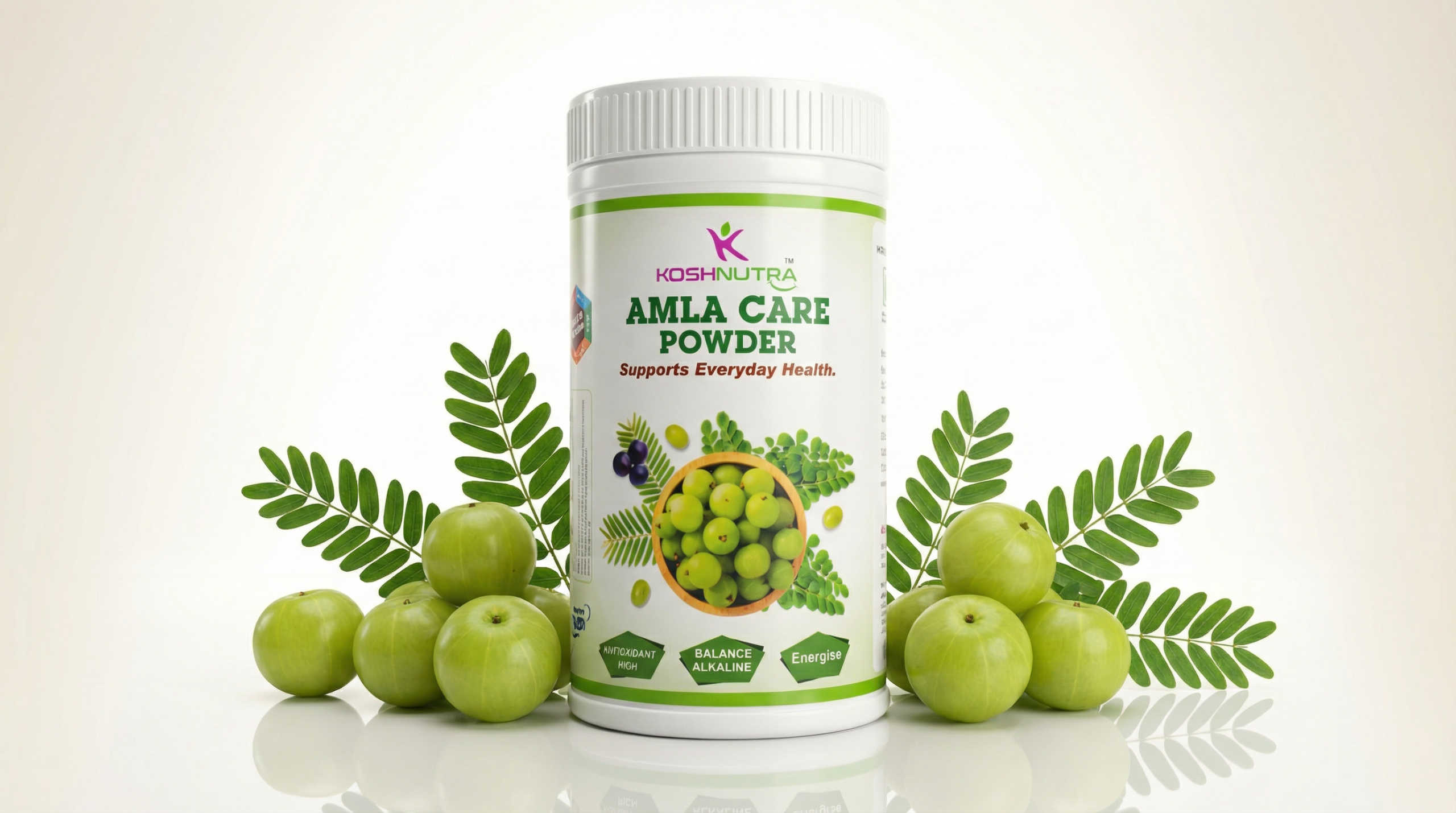
For those who want both moringa and amla benefits without managing multiple supplements, Koshnutra’s Amla Care Powder brings them together in a single, clean formulation.
Key Ingredients:
- Amla Extract (Emblica officinalis) — exceptionally high in Vitamin C; enhances immunity and iron absorption
- Moringa — anti-inflammatory isothiocyanates, blood sugar support, iron, Vitamin A
- Giloy Extract (Tinospora cordifolia) — immune-modulating and anti-inflammatory
- Grape Seed Extract — one of the most potent plant-based antioxidants; supports cardiovascular health
- Resistant Dextrin — a prebiotic fiber that feeds beneficial gut bacteria
- Guar Gum — supports digestive regularity and healthy blood sugar response
What makes Koshnutra Amla Care Powder stand out:
- Purely Maltodextrin Free — no artificial thickeners or cheap fillers that dilute effectiveness
- Non-GMO and naturally sourced ingredients
- Quality tested, manufactured in India under clean production standards
- Designed for daily use — not a one-time detox or short-term fix
Ideal for people dealing with:
- Fatty liver or elevated liver enzymes
- PCOD/PCOS or insulin resistance
- Weight gain related to metabolic imbalance
- Gut discomfort, bloating, or irregular digestion
- Skin and hair concerns linked to nutritional deficiencies
Learn more or order here
How to Use Moringa: Forms, Dosage, and Practical Tips
Available Forms
- Moringa powder — most versatile form; can be added to smoothies, soups, water, or yogurt
- Moringa capsules — convenient for consistent dosing on busy days
- Moringa tea — mild introduction for beginners; lower potency
- Moringa seed oil — for topical application on skin and hair
- Fresh moringa leaves — highest nutritional value; used in cooking across South Asia and Southeast Asia
Recommended Daily Dosage
| Form | Typical Daily Dose | Notes |
|---|---|---|
| Powder | 1–2 tsp (2–4g) | Start low; increase gradually |
| Capsules | 500mg–1,000mg | Follow label instructions |
| Tea | 1–2 cups | 1–2g dried leaf per cup |
| Fresh/cooked leaves | 20–30g | No upper limit in culinary use |
How to Add Moringa Powder to Your Daily Routine
- Start with ½ teaspoon per day to test your digestive tolerance.
- Add to a morning smoothie — banana, almond milk, and moringa blend well together.
- Stir into soups or lentils after cooking. High heat reduces some nutrients, so add at the end.
- Mix into yogurt with honey for a simple, palatable midday snack.
- After one week, increase to 1–2 teaspoons if you feel comfortable.
Moringa Side Effects and Who Should Be Careful
Moringa is generally safe at recommended doses. Most people tolerate it well. However, there are important exceptions.
Consult a doctor before taking moringa if you are:
- Pregnant — moringa bark and root have uterine-stimulating properties. Leaves are generally considered safer, but professional guidance is essential.
- Taking diabetes medication — moringa may further lower blood sugar, creating a risk of hypoglycemia when combined with medication.
- Taking blood pressure medication — moringa’s hypotensive effects may amplify your medication’s action.
- Taking thyroid medication — moringa appears to influence thyroid function and may interfere with medication effectiveness.
- Taking blood thinners — moringa’s anticoagulant properties may interact.
At high doses, moringa can cause nausea, diarrhea, or digestive discomfort. Stick to recommended amounts.
Because moringa supplements are not monitored by the FDA, quality varies significantly between brands. Choose products that are maltodextrin-free, non-GMO, and produced under quality-tested manufacturing conditions.
Common Moringa Myths
Myth: “Moringa cures cancer.” Fact: Laboratory studies have identified compounds in moringa that inhibit cancer cell growth in controlled settings. This is not the same as a cure. No human clinical trials have confirmed moringa as a cancer treatment.
Myth: “Moringa will make you lose weight on its own.” Fact: Moringa may support metabolic health and weight management as part of a balanced lifestyle. It is not a standalone weight-loss supplement.
Myth: “More moringa means more benefits.” Fact: High doses can cause digestive problems and may interfere with medications. More is not better. Recommended dosages exist for good reason.
Myth: “All moringa supplements are equivalent.” Fact: Quality varies enormously. Fillers like maltodextrin, poor-quality sourcing, and lack of third-party testing can make a supplement ineffective or even counterproductive.
How to Choose a Quality Moringa Supplement
- Check the ingredient list for fillers. Avoid products containing maltodextrin, artificial flavors, or unspecified binders.
- Look for non-GMO status. This signals cleaner sourcing practices.
- Choose naturally sourced ingredients. Organic or naturally grown moringa reduces exposure to pesticide residues.
- Demand label transparency. You should know exactly what you’re taking and in what amounts.
- Verify quality testing. Look for GMP-certified manufacturing or explicit quality-tested claims from the brand.
- Consider synergistic formulas. Combinations like moringa + amla offer enhanced iron bioavailability and broader antioxidant coverage than moringa alone.
Scientific References
The following peer-reviewed studies and authoritative sources were used in researching this article:
- Vergara-Jimenez, M., Almatrafi, M. M., & Fernandez, M. L. (2017). Bioactive components in Moringa oleifera leaves protect against chronic disease. Antioxidants, 6(4), 91. https://doi.org/10.3390/antiox6040091
- Kunyanga, C., Imungi, J., Okoth, M., Momanyi, C., Biesalski, H. K., & Vadivel, V. (2012). Antioxidant and antidiabetic properties of condensed tannins in acetonic extract of selected raw and processed indigenous food ingredients from Kenya. Journal of Food Science, 76(4). https://doi.org/10.1111/j.1750-3841.2011.02116.x
- Leone, A., et al. (2015). Moringa oleifera seeds and oil: Characteristics and uses for human health. International Journal of Molecular Sciences, 17(12), 2141. https://doi.org/10.3390/ijms17122141
- Oyeyemi, S. D., et al. (2022). Moringa oleifera and its phytochemicals: Anti-inflammatory and anti-cancer perspectives. Journal of Medicinal Plants Research, 16(3). https://doi.org/10.5897/JMPR
- Abd Rani, N. Z., Husain, K., & Kumolosasi, E. (2018). Moringa genus: A review of phytochemistry and pharmacology. Frontiers in Pharmacology, 9, 108. https://doi.org/10.3389/fphar.2018.00108
- Mbikay, M. (2012). Therapeutic potential of Moringa oleifera leaves in chronic hyperglycemia and dyslipidemia: A review. Frontiers in Pharmacology, 3, 24. https://doi.org/10.3389/fphar.2012.00024
- Stohs, S. J., & Hartman, M. J. (2015). Review of the safety and efficacy of Moringa oleifera. Phytotherapy Research, 29(6), 796–804. https://doi.org/10.1002/ptr.5325
- Taha, N. R., et al. (2022). Moringa oleifera Lam.: A comprehensive review on the hepatoprotective properties and underlying mechanisms. Frontiers in Pharmacology, 13. https://doi.org/10.3389/fphar.2022.940572
- Fahey, J. W. (2005). Moringa oleifera: A review of the medical evidence for its nutritional, therapeutic, and prophylactic properties. Trees for Life Journal, 1(5). https://www.tfljournal.org/article.php/20051201124931586
- NIH National Center for Complementary and Integrative Health — Herb Safety Resources: https://www.nccih.nih.gov/health/herbsataglance
- USDA FoodData Central — Moringa Leaf Powder Nutritional Data: https://fdc.nal.usda.gov
Disclaimer: This article is for informational purposes only and does not constitute medical advice. Always consult a qualified healthcare professional before starting any new supplement, particularly if you have an existing health condition or take prescription medication.


