


With all your juggling of work, training, and so forth, you have certainly pondered this question before:
“Why aren’t I getting anywhere?”
You go to the gym.
You attempt to eat right.
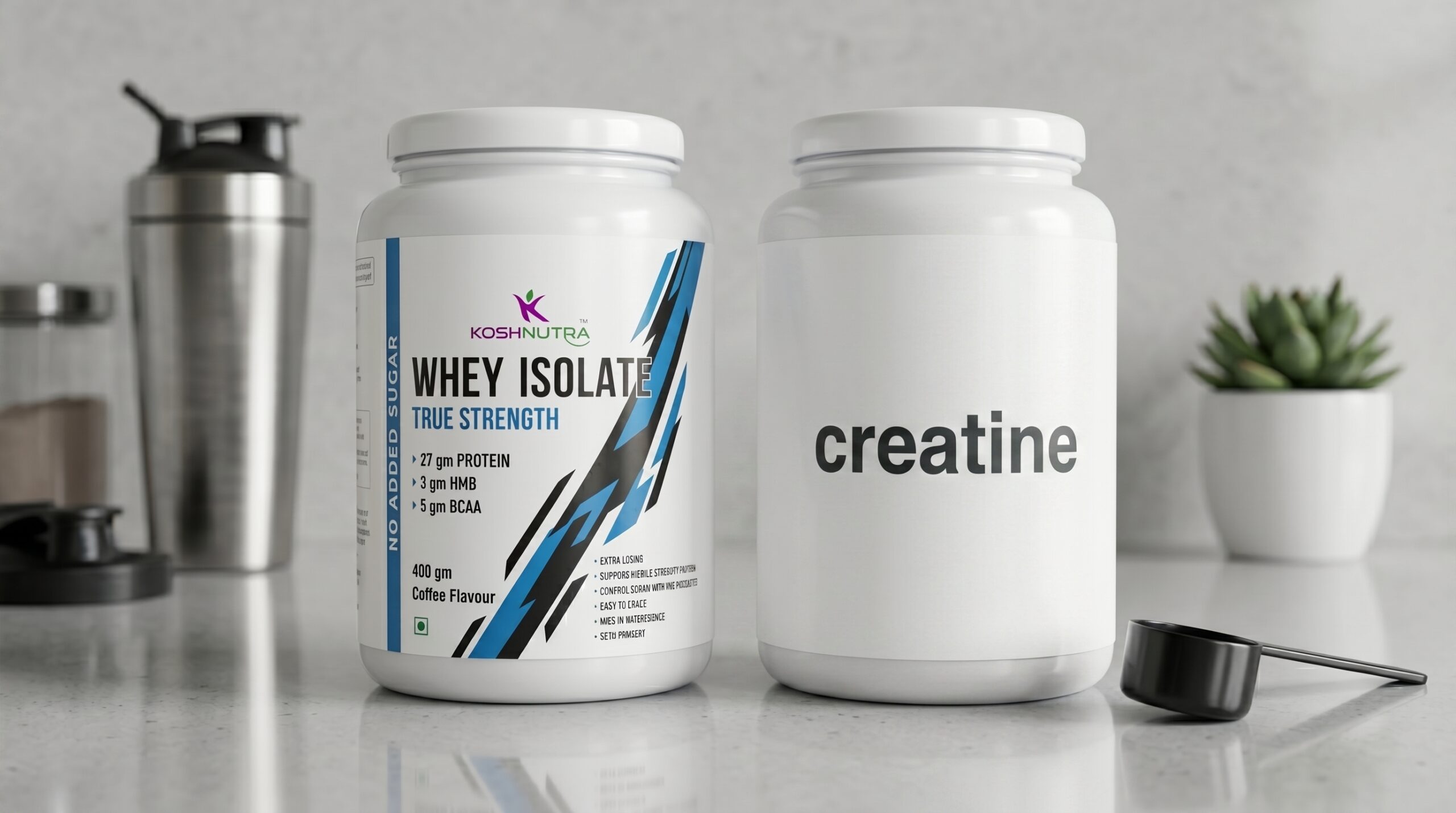
You may even dabble in the world of supplements, such as whey or creatine, or perhaps both.
But something is holding you back.
Your strength gains stall.
Your recoveries feel suboptimal.
And you find that you cannot show for all your hard work.
It’s an all-too-common phenomenon, and in almost all cases, it boils down to one simple problem. You are simply not maximizing your nutrition.
What Does Whey Isolate Protein Do for Muscle Growth and Recovery?
When people ask what whey isolate protein does, the typical answer is simple: it helps build muscle. But the real answer is more precise.
Whey isolate helps your body recover and rebuild muscle efficiently after training. Not just by providing protein, but by delivering it in a form your body can absorb quickly and use effectively.
After a workout, your muscles are in a repair state. They need amino acids, and they need them fast. Whey isolate is designed for exactly this moment. It’s filtered to remove excess fats, carbs, and most lactose, making it easier to digest and faster to absorb.
That’s why many people notice the difference not just in muscle growth, but in how they feel after training.
Why Standard Protein Isn’t Always Enough
Here’s where things get interesting. You can consume enough protein on paper and still not see results. Stress, poor sleep, and gut issues can all interfere with how your body processes nutrients.
That’s often why some people feel bloated after protein shakes or experience inconsistent progress. It’s not always about how much protein you take. It’s about how well your body uses it.
Whey Isolate or Concentrate for Bulking: Which One Actually Works?
The question whey isolate or concentrate for bulking comes up a lot and for good reason.
Whey concentrate is often marketed as a “mass-building” option because it contains more calories from fats and carbs. On the surface, that sounds helpful.
But in practice, it doesn’t always lead to better results.
Many concentrates include added fillers or are harder to digest, especially for people with sensitive stomachs. This can lead to bloating or sluggishness—things that quietly affect both performance and consistency.
Whey isolate, on the other hand, offers a cleaner approach. It gives you high-quality protein without the extra load, allowing you to manage your calories more intentionally through whole foods.
For those aiming to build lean muscle, that level of control makes a real difference over time.
Whey Isolate with Creatine: A Smarter Approach to Strength and Recovery
Combining whey isolate with creatine is one of the most widely used strategies in performance nutrition. But what makes it effective isn’t just popularity—it’s how the two work together.
Creatine supports your performance during training. It helps your muscles produce energy more efficiently, which can translate into better strength output and more productive workouts.
Whey isolate comes in right after. It supports recovery by supplying the building blocks your muscles need to repair and adapt.
When you look at it this way, the combination becomes clearer.
One supports how hard you can train. The other supports how well you recover from it.
That’s why the pairing of creatine and whey isolate tends to deliver more consistent results than using either one alone.
The Role of HMB in Preserving Lean Muscle Mass
There’s a part of muscle building that often gets overlooked.
It’s not just about building muscle, it’s about preventing muscle loss.
Under stress, intense training, or calorie restriction, your body can shift into a state where it breaks down muscle tissue faster than it rebuilds it. This is where progress starts to stall, even if your routine looks solid.
HMB (beta-hydroxy beta-methylbutyrate) plays a different role compared to protein.
Instead of building muscle directly, it helps reduce muscle breakdown. Think of it as a support system that protects the muscle you’re working to build.
This becomes especially relevant if your lifestyle includes frequent training, high stress, or periods of dieting. In those conditions, preserving muscle is just as important as building it.
Why Gut Health Affects How Whey Isolate Works
One factor that rarely gets enough attention is digestion.
Your body doesn’t benefit from what you consume—it benefits from what it can absorb.
If digestion is compromised, even high-quality protein may not be fully utilized. This can show up as bloating, discomfort, or simply slower progress.
That’s why modern formulations often include digestive support. Ingredients like enzymes or prebiotics help your body process protein more efficiently, making each serving more effective.
It’s a subtle shift, but one that can significantly impact long-term results.
How to Use Whey Isolate with Creatine for Best Results
You don’t need a complicated routine to make this work.
A consistent intake of whey isolate, paired with creatine, is often enough to support both performance and recovery. Taking it post-workout is common, but consistency across days matters more than perfect timing.
What tends to make the biggest difference isn’t intensity, it’s sustainability.
When your nutrition supports your training, your body responds more predictably. Progress becomes less about guesswork and more about momentum.
Choosing the Right Whey Isolate Formula for Long-Term Results
Not all whey isolate products deliver the same experience.
Beyond protein content, formulation matters. A well-designed product considers digestion, recovery, and overall metabolic support—not just protein grams.
This is where advanced formulations stand out. By combining clean protein with supportive compounds like HMB, digestive enzymes, or anti-inflammatory nutrients, they address multiple aspects of performance at once.
Instead of adding more supplements, the focus shifts to choosing a better one.
Final Thoughts: Build Smarter, Not Just Harder
If your progress has felt inconsistent, it’s worth taking a closer look at what’s happening outside your workouts.
Training is only one part of the equation. Recovery, absorption, and consistency complete the picture.
Understanding what whey isolate protein does, how whey isolate with creatine supports performance, and why factors like HMB and digestion matter can help you move forward with more clarity.
Better results don’t usually come from doing more. They come from doing the right things—consistently.
Upgrade Your Routine with a Smarter Whey Isolate
If your progress feels stuck despite consistent training, it may be time to upgrade not your effort—but your formulation. Koshnutra Whey Isolate (₹1,299.00) is built to support real results, combining clean whey isolate with HMB to preserve lean muscle, Omega-3 for recovery, digestive enzymes, and inulin for better absorption, plus essential vitamins and minerals for metabolic health. Designed to be easy on digestion and suitable even for those managing blood sugar or using GLP-1 protocols, this isn’t just protein—it’s a more complete system for strength, recovery, and performance. Simply mix 3 scoops (≈45 g) with 200 ml of water once or twice daily, post-workout or between meals, and make it part of a consistent routine that actually works.
Scientific References & Citations
- Wilson, J. M., et al. (2013). International Society of Sports Nutrition Position Stand: beta-hydroxy-beta-methylbutyrate (HMB). Journal of the International Society of Sports Nutrition, 10(1), 6. Details the anti-catabolic effects of HMB and its role in preserving lean muscle mass during resistance training. Read Study (PubMed)
- Cribb, P. J., et al. (2006). The effect of whey isolate and resistance training on strength, body composition, and plasma glutamine. International Journal of Sport Nutrition and Exercise Metabolism, 16(5), 494-509. Highlights the superior body composition changes when utilizing whey isolate compared to other protein sources. Read Study (PubMed)
- Burke, D. G., et al. (2001). The effect of whey protein supplementation with and without creatine monohydrate combined with resistance training on lean tissue mass and muscle strength. International Journal of Sport Nutrition and Exercise Metabolism, 11(3), 349-364. Validates the synergistic effects of combining whey protein and creatine for enhanced muscle tissue growth and strength. Read Study (PubMed)


