


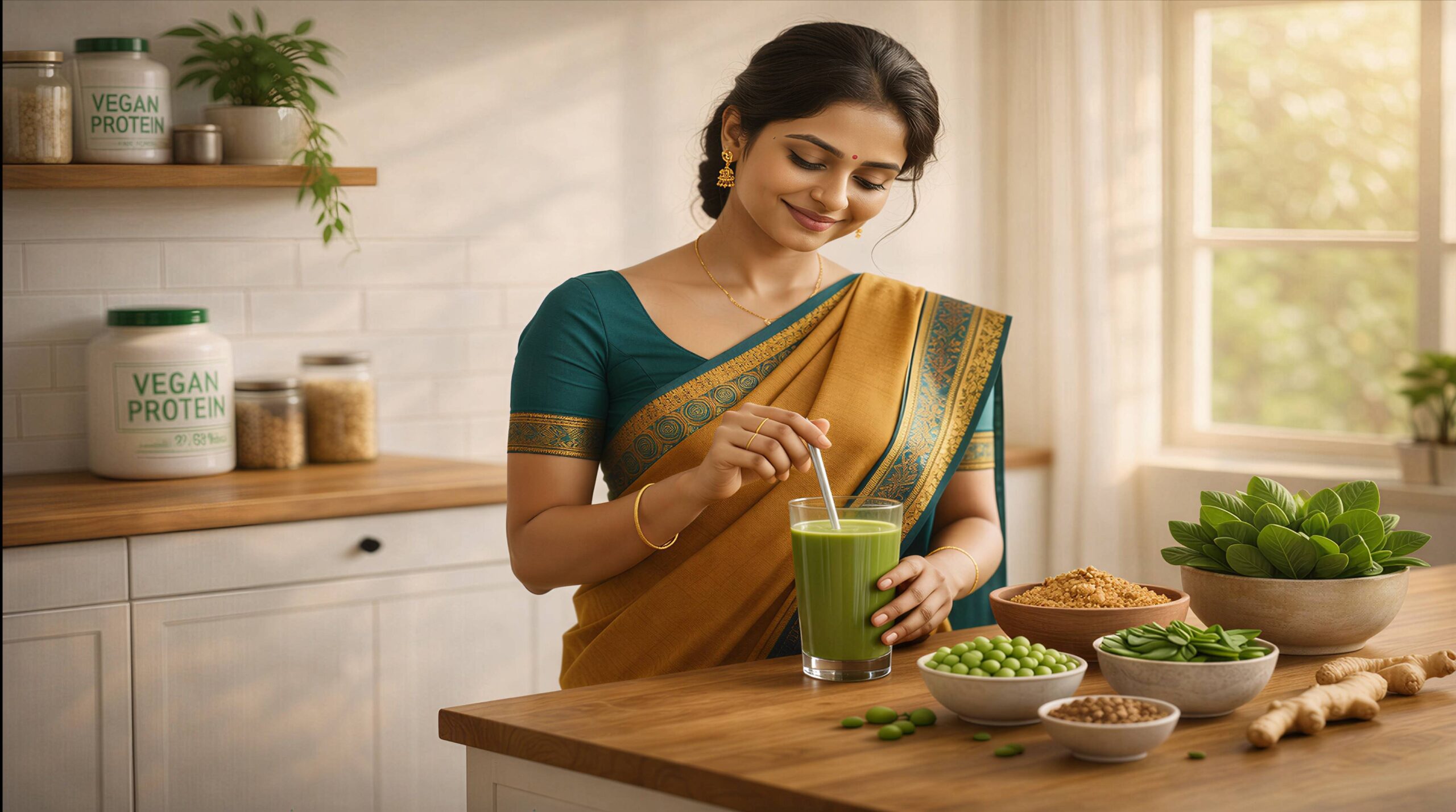
In our years of helping women, the most common complaint we hear isn’t about weight. It’s about feeling completely exhausted.
Mothers running on empty. Gym-goers are working hard but not seeing muscle tone. Women in their 30s and 40s are dealing with crazy hormones. They sit with us, showing us lists of vitamins they take, wondering why nothing helps.
Our answer is usually the same “You aren’t eating enough protein, and the protein you do eat is hurting your stomach.”
Let’s keep it simple. You don’t need a biology degree to know your body needs protein to heal and rebuild. But if you rely on heavily processed dairy whey or cheap soy, you might be doing more harm than good.
This is exactly why switching to a clean vegan protein powder isn’t just a trend. For people, it is something your body truly needs to function properly.
Why Whey Isn’t Working for You
Many of our female clients come to us bloated and frustrated. They drink a regular whey shake after a workout, only to feel super bloated by dinner.
Dairy often causes inflammation. When your stomach is upset, your body can’t absorb nutrients well. Even worse, an upset stomach messes with your hormones, making issues like PCOS, thyroid problems, and extreme tiredness even worse.
This is where a good vegan protein powder for women changes the game.
By cutting out dairy and soy, we remove the top two things that mess with your hormones. Good plant-based proteins are gentle on your stomach. They give your body exactly what it needs to build muscle, balance hormones, and repair cells.
Busting the Myths: Vegan Protein Side Effects
Let’s talk about the elephant in the room. You’ve probably heard rumors about the side effects of vegan protein powder.
Some say it causes bloating. Others complain it tastes like chalk or has bad chemicals in it.
Here is the truth from our years of reading supplement labels: plant protein doesn’t cause bloating, but cheap extra ingredients do.
If you buy a cheap powder full of artificial gums and hidden sugars, your stomach will hurt. Also, relying on just one plant source (like only pea or only hemp) might mean you miss out on key nutrients.
The secret to avoiding side effects is balance. When we mix Brown Rice Protein and Pea Protein, we get a complete protein blend that is just as good as whey, but without the stomach ache.
Making Vegan Protein a Part of Your Life
Adding plant protein to your day shouldn’t feel like a chore. You don’t need complicated recipes to make it work.
If you want to get the most out of your protein, here are the simple steps we give our clients:
- Morning Energy Boost:
Start your day with protein. Instead of just toast, mix your powder with almond milk and a handful of berries. It keeps your blood sugar steady all day. - After a Workout
Drink your shake within 45 minutes of exercise. This is when your muscles need it most to heal and prevent soreness. - Afternoon Energy Fix
Skip the 3 PM coffee. Half a scoop of plant protein in cold water gives your brain the fuel it needs to keep you alert and happy. - Stay Consistent
Protein isn’t magic; it’s food. You need to hit your protein goals every single day, not just on workout days.
Our Top Pick: A Plant-Powered Formula for Women
After looking at hundreds of supplements, we rarely recommend products unless they are truly great. But there is one formula we always recommend to our clients because it solves the exact problems we just talked about.
It’s a Vegan Protein made specifically for strength, recovery, and daily health, at a great price of ₹1,199.00.
Why This Formula Works
What makes this product special isn’t just the protein, it’s because the healthy plant extracts added to it.
- Complete Protein
It uses a high-quality blend of Brown Rice and Pea protein. This gives you everything you need to build lean muscle and recover fast. - No Bad Fillers
It has zero soy, dairy, or hidden sugars. It uses Coconut Milk Powder for a creamy taste that won’t hurt your stomach. - Hormone & Metabolism Support
This is a game-changer. It includes Moringa (for daily nutrition), Panax Ginseng (for energy), and Garcinia & Mangosteen (for healthy weight support). - Skin & Cell Protection
Grape Seed and Green Tea extracts provide lots of antioxidants to keep your skin glowing and healthy.
This isn’t just a protein powder, it’s a daily health boost. Because it’s high in fiber and free of hormone-messing chemicals, it’s very safe and helpful for people with diabetes, celiac disease, or women managing PCOS.
How to Use It
Keep it practical and simple:
- Amount
Mix 2 scoops (about 30 g) with 200 ml of cold water or your favorite unsweetened plant milk. - When to drink
Enjoy it once or twice a day, depending on your activity level and protein needs.
Your Next Step to Vibrant Health
You can’t build a strong, energetic body on bad nutrition and poor supplements. If you are tired of feeling sluggish, bloated, and stuck, it’s time to upgrade what you eat.
Switching to a healthy, gut-friendly plant protein is one of the best choices you can make for your health this year. Don’t settle for always feeling tired. Get your strength back, balance your hormones, and boost your metabolism with a formula that works with your body, not against it.
Ready to feel the difference clean fuel makes? Secure your jar of the ultimate Vegan Protein today. Click here to check out instantly. If you have questions about your goals or how this fits into your diet, tap here to chat with our team on WhatsApp. We are here to help you feel your best!
Scientific References
- Babault, N., Païzis, C., Deley, G., Guérin-Deremaux, L., Saniez, M. H., Lefranc-Millot, C., & Allaert, F. A. (2015). Pea proteins oral supplementation promotes muscle thickness gains during resistance training: a double-blind, randomized, Placebo-controlled clinical trial vs. Whey protein. Journal of the International Society of Sports Nutrition, 12(1), 3. Read the study
- Joy, J. M., Lowery, R. P., Wilson, J. M., Purpura, M., De Souza, E. O., Wilson, S. M., … & Jäger, R. (2013). The effects of 8 weeks of whey or rice protein supplementation on body composition and exercise performance. Nutrition Journal, 12(1), 86. Read the study
- Stohs, S. J., & Hartman, M. J. (2015). Review of the Safety and Efficacy of Moringa oleifera. Phytotherapy Research, 29(6), 796-804.Read the study


