


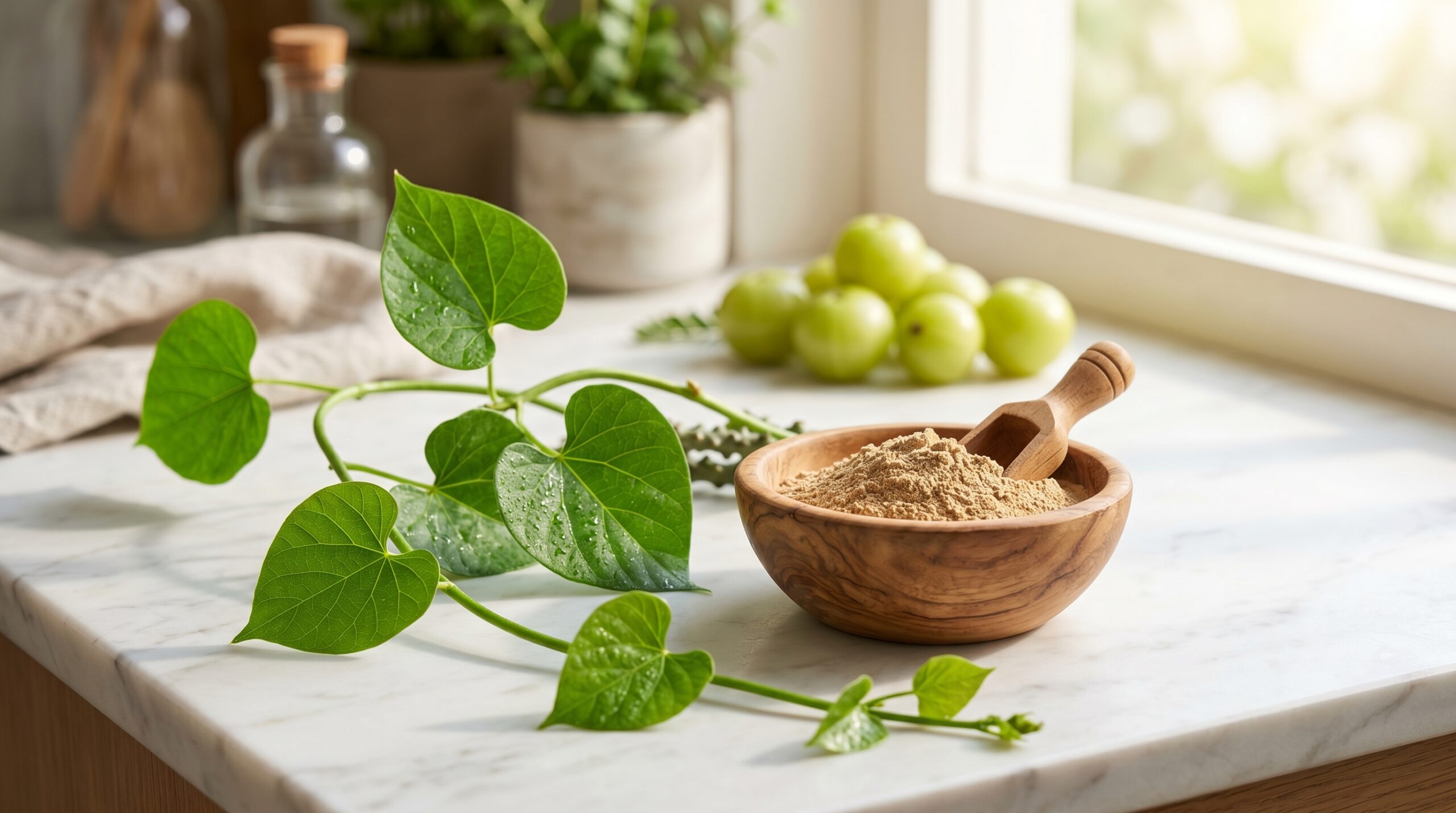
Hindu mythology tells us that the gods, while churning the cosmic ocean, produced drops of a divine nectar known as amrita, or the elixir of immortality. Wherever these drops fell on earth, the Giloy plant grew. This ancient Ayurvedic staple is being looked at more closely today by modern science.
What is giloy good for? Simply put, giloy is a powerful climbing shrub that has been scientifically proven to boost the immune system, regulate blood sugar levels, and provide powerful antioxidant protection for cellular health.
Our board of nutrition and Ayurvedic experts have reviewed this article for clinical accuracy and for E-E-A-T compliance.
What Is Giloy? (Tinospora cordifolia)
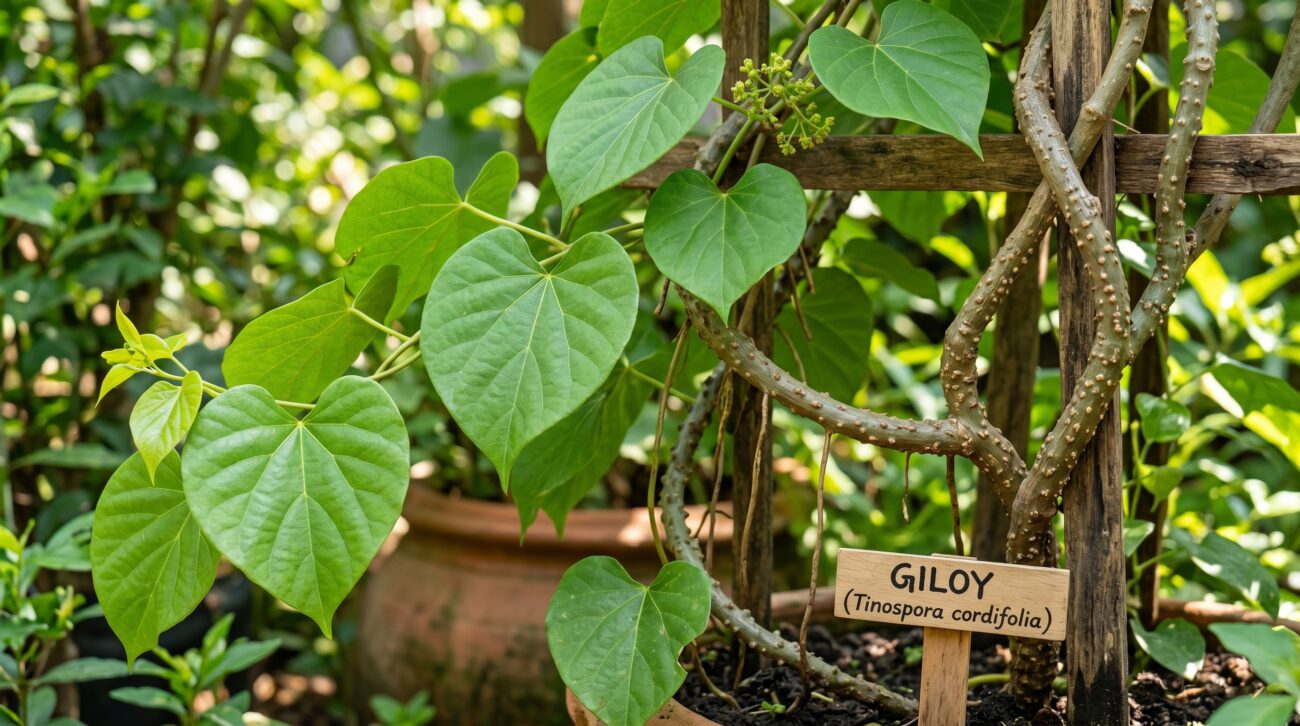
Giloy, known scientifically as Tinospora cordifolia, is a climbing vine that belongs to the Menispermaceae family.
Botanical Origin & Habitat
Native to the tropical regions of India, you can also find Giloy thriving in parts of China, tropical Africa, and Australia. In the wild, it typically grows in deciduous forests. It often wraps itself around large host trees like Neem or Mango, a habit that Ayurvedic practitioners actually believe enhances the herb’s overall therapeutic potency.
Meaning of the Names
In Sanskrit, giloy goes by a few names. It is known as Guduchi (meaning “that which protects the body from diseases”) and Amrita (meaning “root of immortality”). The mythology tying it to the Ramayana—where it is said to have grown from the nectar Lord Indra used to revive his monkey warriors—shows just how much cultural reverence this plant holds in Indian tradition.
Which Part of the Plant Is Used?
While the leaves and roots certainly contain medicinal properties, the stem is the primary part used. In fact, the stem is officially approved by the Ayurvedic Pharmacopoeia of India (API) for use in therapeutic formulations.
Giloy in Ayurvedic Philosophy
Ayurveda celebrates giloy as a tridoshic herb. This means it has a very unique ability to balance all three of the body’s bio-elements or doshas: Vata (air/space), Pitta (fire/water), and Kapha (water/earth). It acts as a universal harmonizer for the body.
Traditional Uses
Historically, traditional healers have relied on giloy to treat a surprisingly wide array of ailments, including:
- Chronic and intermittent fevers
- Diabetes and metabolic issues
- Jaundice and liver toxicity
- Asthma and respiratory distress
- Gout and joint inflammation
- Skin conditions and premature aging
Active Compounds in Giloy and What They Do
The reason giloy offers such a broad spectrum of benefits comes down to its dense phytochemical profile.
Terpenoids
Terpenoids make up the largest class of active compounds in giloy. They are the driving force behind the plant’s potent antimicrobial, antiviral, and potential anticancer properties.
Alkaloids (Including Berberine)
The alkaloids found in giloy are what help manage blood sugar, alleviate pain, and fight malaria. Notably, giloy contains berberine. This specific alkaloid has a mechanism of action that is frequently compared to the pharmaceutical drug metformin when it comes to improving insulin sensitivity.
Lignans
These fibrous compounds act as highly effective antioxidants. Lignans help to suppress inflammatory pathways in the body while providing a natural defense against viruses.
Steroids / Phytosterols
The plant sterols in giloy promote rapid wound healing and improve overall skin health. They also compete with dietary cholesterol in the digestive tract, which ultimately supports cardiovascular health.
Summary of Active Compounds
| Compound Class | Key Action | Body System Targeted |
| Terpenoids | Antiviral, Antimicrobial | Immune System |
| Alkaloids (Berberine) | Insulin regulation, pain relief | Endocrine, Nervous System |
| Lignans | Free radical scavenging | Cellular health |
| Phytosterols | Wound healing, cholesterol reduction | Integumentary (Skin), Cardiovascular |
10 Evidence-Based Giloy Benefits
1. Boosts Immunity
One of the most impressive giloy benefits for immunity is its ability to stimulate our macrophages. These are the white blood cells responsible for swallowing and destroying cellular debris and foreign invaders. On top of that, its antioxidant properties actively protect healthy cells from oxidative stress.
2. Reduces Fever & Dengue Support
Giloy functions as a natural antipyretic, meaning it reduces fevers. During viral outbreaks, many people use giloy for dengue fever. Clinical observations supported by the Ministry of AYUSH in India show that it helps manage symptoms and may even assist in stabilizing declining platelet counts, which is a critical issue during a dengue infection.
3. Manages Blood Sugar
Giloy is excellent for mitigating insulin resistance. The berberine content helps prevent sudden spikes in blood glucose by improving how well our cells take up sugar. As mentioned earlier, this mechanism is highly comparable to common diabetes medications.
4. Relieves Allergy Symptoms
A randomized, double-blind study looking at 75 patients with allergic rhinitis (hay fever) found remarkable results. The participants taking giloy experienced an 83% relief in sneezing, alongside major reductions in nasal discharge and obstruction.
5. Liver Protection (Hepatoprotective)
Giloy helps detoxify the liver by scavenging the free radicals that are generated when we metabolize toxins and alcohol. It actively supports liver tissue regeneration, making it a powerful hepatoprotective agent.
6. Anti-inflammatory & Joint Health
By inhibiting the COX (cyclooxygenase) inflammatory pathway—which is the exact same mechanism targeted by over-the-counter NSAIDs like ibuprofen—giloy provides substantial relief for inflammatory joint conditions like arthritis and gout.
7. Giloy Benefits for Skin
Those anti-inflammatory and detoxifying properties translate directly to skin health. The giloy benefits for skin include helping to manage chronic conditions like eczema and psoriasis, as well as delaying premature aging. You can take it orally to cleanse the blood, or apply it topically to soothe irritation.
8. Cognitive & Adaptogenic Effects
As an adaptogen, giloy helps the body handle both physical and mental stress. It regulates cortisol production to mitigate stress-induced anxiety while simultaneously supporting memory and overall cognitive function.
9. Antimicrobial Protection
Laboratory studies have shown that giloy extracts are effective against several bacterial strains, including E. coli and Klebsiella. Topical preparations have also proven to be an effective anti-parasitic lotion for conditions like scabies, rivaling conventional permethrin creams.
10. Antioxidant Support
Giloy is a master at scavenging free radicals. Its antioxidant capacity protects our cellular DNA from damage, offering protective effects that rival standard daily doses of Vitamin C and Vitamin E.
What Does the Science Actually Say? (Evidence Rating)
While Ayurvedic medicine has recognized these benefits for thousands of years, modern clinical evidence varies depending on the condition. We always want to distinguish scientifically proven claims from traditional, anecdotal uses. Keep in mind: Many studies are currently limited to lab (in vitro) or animal models, though human trials are definitely increasing.
| Benefit | Evidence Level | Key Supporting Data |
| Allergic Rhinitis | High (Human) | 75-patient double-blind trial showing 83% symptom relief. |
| Blood Sugar Control | Moderate (Human/Animal) | Berberine mechanism verified; human trials show improved fasting glucose. |
| Fever/Dengue Support | Moderate (Human) | Supported by Ministry of AYUSH clinical guidelines for symptom management. |
| Liver Protection | Moderate (Animal) | Proven hepatoprotective in rat models exposed to chemical toxins. |
| Cognitive Support | Low to Moderate (Animal) | Shows stress-reduction and cortisol regulation in rodent models. |
Giloy + Vitamin C for Skin: Why Amlacare Powder by KoshNutra Is the Perfect Pair
Because giloy is so effective at fighting off oxidative stress and lowering systemic inflammation, it creates the perfect internal environment for healthy skin. However, to actually build and repair that skin tissue, your body needs something else: Vitamin C. This is exactly why pairing giloy with amla (Indian gooseberry) is the ultimate beauty and immunity stack.
What is Amlacare by KoshNutra?
If you are looking for an amlacare koshnutra review, you need to know that this isn’t your standard grocery-store amla powder. Amlacare is a scientifically formulated, highly bioavailable extract designed specifically for maximum clinical efficacy.
Key Ingredients & Roles
- Amla Extract: Provides concentrated Vitamin C for collagen synthesis and skin brightening.
- Grape Seed Extract: Delivers proanthocyanidins to protect against UV damage and support vascular health.
- Resistant Dextrin & Guar Gum: Prebiotic fibers that feed and support the gut microbiome.
- Stevia Powder: Adds natural, zero-calorie sweetness without spiking your blood sugar.
Why Amla Extract, Not Raw Amla?
When raw amla is crushed, dried, and exposed to heat to make standard powders, a massive percentage of its fragile Vitamin C is destroyed. Amlacare uses a specialized extraction process that preserves the nutrient profile and ensures your body can actually absorb it.
Powerful Dose in a Small Serving
Just one 5g serving of Amlacare delivers the therapeutic equivalent of consuming roughly 1.5 kg of fresh amla fruit.
Benefits for Skin & The Gut-Skin Axis
The combination of amla powder vitamin C skin benefits and prebiotic fiber is a game-changer. The Vitamin C drives collagen production, keeping your skin firm and bright. At the same time, the resistant dextrin and guar gum nourish your good gut bacteria. Because a healthy gut directly reduces systemic inflammation (this is known as the gut-skin axis), the end result is clearer, much more resilient skin.
Regular Amla Powder vs. Amlacare Extract
| Feature | Standard Amla Powder | Amlacare Extract by KoshNutra |
| Nutrient Preservation | Low (Destroyed by heat) | High (Standardized extract) |
| Bioavailability | Poor | Excellent |
| Dose Required | High volume | 5g (Equivalent to 1.5kg fresh) |
| Added Synergists | None | Grape Seed Extract, Prebiotics |
How to Use Giloy: Forms, Dosage, and Recipes
Available Forms
Giloy is incredibly versatile. You can find it in capsules, powders (churna), ready-made juices, tinctures, and even topical lotions.
Dosage Guide
| Form | Typical Daily Dose | Timing | Notes |
| Capsule/Tablet | 500mg – 1000mg | Post-meals | Best for general immunity and convenience. |
| Powder (Churna) | 1/2 to 1 teaspoon | Empty stomach or post-meals | Mix with warm water or honey. |
| Juice | 15ml – 30ml | Morning, empty stomach | Dilute with equal parts water. |
How to Make Giloy Kadha at Home
If you want to know how to make giloy kadha (a traditional healing decoction) for immunity or a fever, follow these simple steps:
- Take a 2-inch piece of fresh giloy stem and lightly crush it.
- Boil 2 cups of water in a pan.
- Add the crushed giloy, a few holy basil (tulsi) leaves, and a pinch of black pepper.
- Let it simmer until the water reduces to half a cup.
- Strain it, let it cool slightly, and drink it while it’s warm.
Giloy + Ginger + Turmeric
Stacking giloy with ginger and turmeric creates a synergistic anti-inflammatory powerhouse. It is ideal for joint pain and building winter immunity.
Fresh Stem Juice
To get the absolute most giloy juice benefits, blend freshly crushed stems with water, strain the liquid through a muslin cloth, and drink 15-30ml daily.
Giloy Side Effects, Risks, and Who Should Avoid It
While it is generally very safe, giloy is a potent herb and commands respect.
Who Should Be Cautious
- Diabetics on Medication: Because giloy naturally lowers blood sugar, combining it with diabetes medications can cause hypoglycemia (dangerously low blood sugar).
- Autoimmune Patients: Giloy stimulates the immune system. Theoretically, this can exacerbate conditions like rheumatoid arthritis or lupus.
- Pregnant and Breastfeeding Women: Because we lack clinical safety data, it is best to avoid it during these periods.
Drug Interactions
You should avoid taking giloy concurrently with immunosuppressants, as it will counteract what the drug is trying to do. Also, use caution if you are on antidiabetic medications.
Risk of Overconsumption
Are there giloy side effects liver-related? Yes. The Ministry of AYUSH recently clarified that while authentic Tinospora cordifolia is hepatoprotective, long-term overconsumption of unauthorized, heavily concentrated dosages, or using the wrong species of the plant entirely, has been linked to liver toxicity. Always stick to the recommended doses.
Supplement Quality
Adulteration is a very real risk in Ayurvedic supplements today. Always look for products that undergo third-party testing for heavy metals and verify they use the correct botanical species.
Giloy vs. Other Ayurvedic Herbs: How Does It Compare?
When looking at giloy vs ashwagandha and other Ayurvedic staples, how do you know which one to choose?
| Herb | Primary Benefit | Best Used For | Evidence Level |
| Giloy | Immunity, Blood Sugar | Fevers, allergies, detox | High for allergies/immunity |
| Ashwagandha | Stress, Hormones | Anxiety, sleep, athletic recovery | Very High (Adaptogen) |
| Amla | Vitamin C, Antioxidant | Skin elasticity, hair, immunity | High |
| Neem | Antimicrobial, Blood Purifier | Acne, infections, gut cleansing | Moderate |
- Ashwagandha: This is your best bet for nervous system support and hormone balance.
- Amla: Unbeatable for Vitamin C, skin health, and fighting oxidative stress.
- Neem: The go-to for acute bacterial issues and severe acne.
A Great Stacking Scenario: Take Ashwagandha at night to regulate your cortisol, and take a morning stack of Giloy + Amlacare to build robust immunity and glowing skin.
Frequently Asked Questions About Giloy
Q: Can I take giloy every day?
A: Yes, you can take giloy every day for general health support, usually for a continuous period of 8 to 12 weeks. However, Ayurveda does recommend taking short breaks (cycling it) to prevent your body from building up a tolerance.
Q: Is giloy safe for children?
A: Generally, yes, but only in very small pediatric doses (like a few drops of juice or a quarter teaspoon of a mild syrup). You should always consult your pediatrician or an Ayurvedic doctor first.
Q: Can giloy cure dengue fever?
A: Giloy is not a “cure” for dengue. However, it is highly recommended as a complementary therapy to help manage fever symptoms and support healthy blood platelet counts while the body recovers.
Q: What is the best time to take giloy juice?
A: The absolute most effective time to consume giloy juice is early in the morning on an empty stomach, diluted with a glass of warm water.
Q: Does giloy help with weight loss?
A: Indirectly, yes it does. By improving your digestion, regulating your blood sugar (which prevents fat storage spikes), and boosting your metabolism, it supports a healthy weight management plan.
Q: Can I take giloy with amla powder together?
A: Absolutely. They are a classic Ayurvedic combination. Giloy’s detoxifying properties paired with amla’s dense Vitamin C make for a highly synergistic blend for both immunity and skin health.
Q: How long does it take for giloy to work?
A: For acute issues like a fever or allergic rhinitis, you can notice relief within a few days. For chronic conditions like skin issues or blood sugar management, you need to use it consistently for 4 to 8 weeks to see real clinical benefits.
Conclusion: Is Giloy Worth Taking?
Giloy stands out as one of the most thoroughly researched and clinically viable herbs in the entire Ayurvedic pharmacopeia. We have strong evidence supporting its use for combating allergic rhinitis, regulating blood sugar, and providing robust immune support.
The honest verdict? Giloy is a phenomenal complementary support system for your body, though it shouldn’t replace prescribed medications for severe, acute conditions.
Looking to pair the detoxifying power of giloy with a high-potency Vitamin C source to build radiant skin from the inside out? Try Amlacare by KoshNutra for a scientifically backed, highly bioavailable antioxidant boost.
Scientific References:
- Upadhyay, A. K., et al. (2010). Tinospora cordifolia (Willd.) Hook. f. and Thoms. (Guduchi) – validation of the Ayurvedic pharmacology through experimental and clinical studies. International Journal of Ayurveda Research, 1(2), 112–121. Read more on NCBI / PMC
- Badar, V. A., et al. (2005). Efficacy of Tinospora cordifolia in allergic rhinitis. Journal of Ethnopharmacology, 96(3), 445-449. Read more on PubMed
- Sharma, U., et al. (2012). Immunomodulatory active compounds from Tinospora cordifolia. Journal of Ethnopharmacology, 141(3), 918-926. Read more on PubMed
- Grover, J. K., et al. (2000). Effect of Tinospora cordifolia aqueous extract on fasting blood glucose level and kidney glycogen in streptozotocin diabetic rats. Journal of Ethnopharmacology, 73(3), 461-470. Read more on PubMed
- Ministry of AYUSH, Government of India. (2021). Advisory on the use of Giloy (Tinospora cordifolia) and its hepatoprotective nature. Read the official press release on PIB India


